

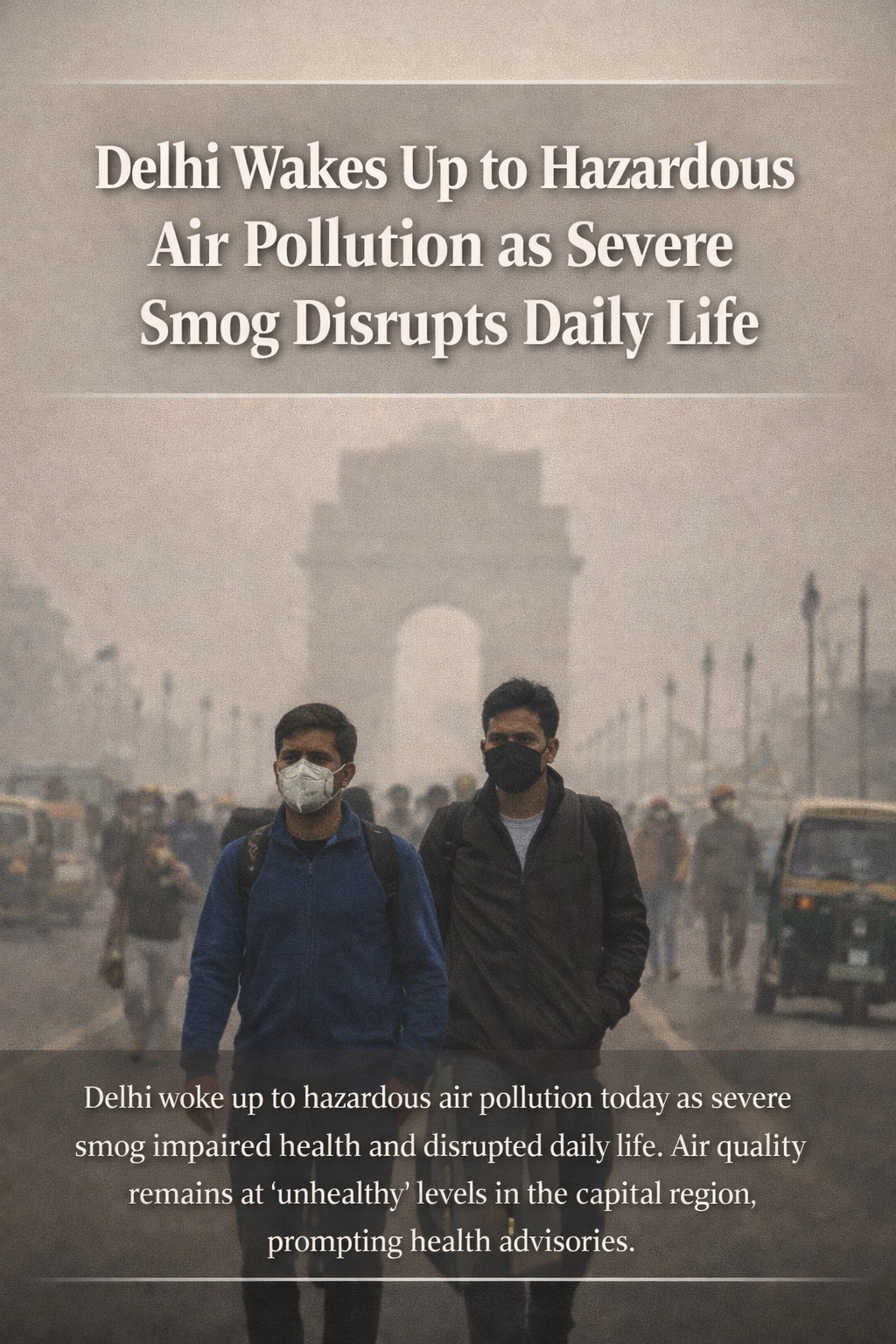
Delhi woke up to hazardous air pollution on Wednesday as a thick blanket of smog engulfed the national capital, pushing air quality levels into the “severe” and “very unhealthy” categories across multiple monitoring stations. Reduced visibility, a sharp odor in the air, and breathing discomfort marked the morning hours, affecting millions of residents as they stepped out for work, school, and daily activities.
According to air quality assessments, high concentrations of particulate matter—especially PM2.5 and PM10—continue to pose serious health risks. Doctors have reported a rise in complaints related to respiratory distress, eye irritation, throat infections, and aggravation of asthma and heart conditions. Children, the elderly, and people with pre-existing illnesses remain the most vulnerable, prompting authorities to issue health advisories urging residents to limit outdoor exposure.
The persistent smog is attributed to a combination of factors, including vehicular emissions, industrial pollution, construction dust, and unfavorable weather conditions that trap pollutants close to the ground. Calm winds and low temperatures have further worsened the situation, preventing the dispersion of harmful particles.
Schools and offices have advised flexible schedules in some areas, while traffic movement slowed in several parts of the city due to poor visibility. Environmental experts have once again stressed the need for long-term solutions, including cleaner transport systems, stricter emission controls, and sustainable urban planning.
As air quality remains at alarming levels, residents are advised to wear protective masks, use air purifiers indoors, and follow official guidelines. The situation highlights the recurring air pollution crisis in Delhi and the urgent need for coordinated action to safeguard public health and improve air quality in the capital region news as reported.


- upgraderz.aws@gmail.com
- upgraderz.aws@gmail.com
- upgraderz.aws@gmail.com
- upgraderz.aws@gmail.com