

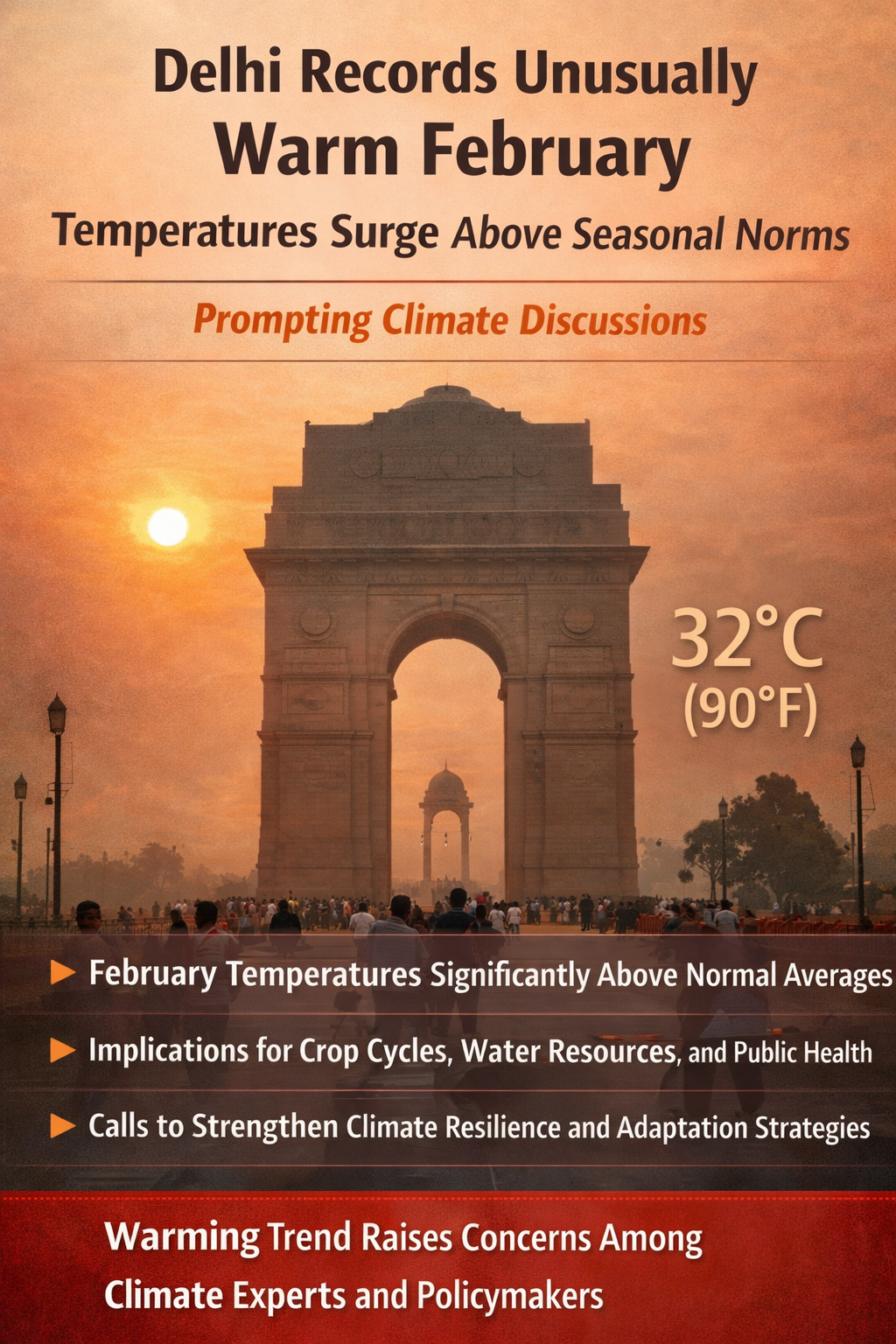
The national capital New Delhi has recorded an unusually warm February this year, with temperatures rising significantly above long-term seasonal averages. According to data from the India Meteorological Department, both daytime and nighttime temperatures remained consistently higher than normal, raising concerns among climate experts and policymakers.
Meteorologists noted that maximum temperatures frequently crossed expected limits for February, with some days resembling early summer conditions. The warmer spell has been attributed to reduced western disturbances, lower rainfall activity, and changing atmospheric circulation patterns. Experts suggest that such anomalies could be linked to broader climate change trends, which are increasingly influencing regional weather behaviour.
Environmental researchers warn that rising winter temperatures may have long-term implications for agriculture, water resources, and public health. Warmer winters can affect crop cycles, reduce soil moisture retention, and increase the risk of early heatwaves in March and April. Urban planners are also concerned about the impact on energy demand, as higher temperatures may lead to increased electricity consumption for cooling.
The unusual February heat has sparked fresh discussions about climate resilience and sustainable urban development in the capital. Policymakers are being urged to strengthen climate adaptation strategies, including improved green cover, heat action plans, and public awareness initiatives.
As global climate patterns continue to shift, the temperature spike in Delhi serves as a reminder of the urgent need for coordinated action to address environmental challenges and ensure long-term sustainability news as reported


- upgraderz.aws@gmail.com
- upgraderz.aws@gmail.com
- upgraderz.aws@gmail.com
- upgraderz.aws@gmail.com