

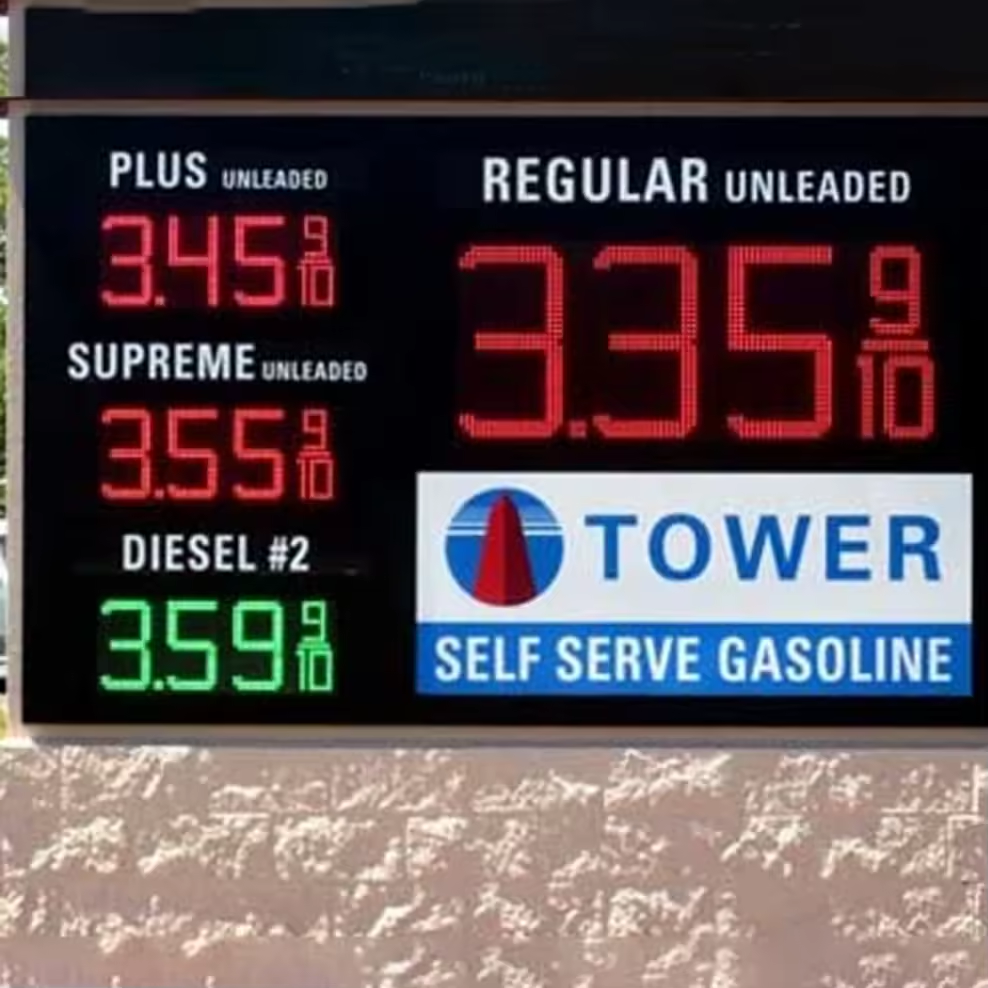
Governments across Asia and Europe are introducing emergency energy-saving policies as global fuel prices continue to rise due to disruptions in oil supply and escalating geopolitical tensions in the Middle East. The surge in crude oil prices has increased pressure on national economies, forcing governments to adopt measures aimed at reducing fuel consumption and protecting energy supplies.
Several Asian countries have already implemented strict conservation steps. In Pakistan, the government introduced a series of austerity measures, including a four-day workweek for public offices, temporary school closures, and increased remote work, in order to reduce electricity and fuel use.
Meanwhile, countries such as Thailand, Vietnam, and the Philippines have encouraged government employees to work from home, reduced official travel, and limited air-conditioning usage in public buildings as part of nationwide efforts to save energy.
Across Europe, policymakers are also considering measures to shield industries and households from rising energy costs. Officials in the European Union are discussing policies such as energy price controls and support programs to help businesses cope with the surge in gas and electricity prices.
Experts say these policies are being implemented as oil prices climb sharply due to disruptions in global energy supply routes and fears of prolonged conflict affecting major oil transit regions. Governments are now focusing on reducing energy consumption, stabilizing fuel markets, and ensuring long-term energy security.
Analysts warn that if global fuel prices remain high, more countries could introduce additional measures such as fuel subsidies, price caps, reduced public transportation fares, and increased investment in renewable energy to reduce dependence on imported fossil fuels.News as Reported.