

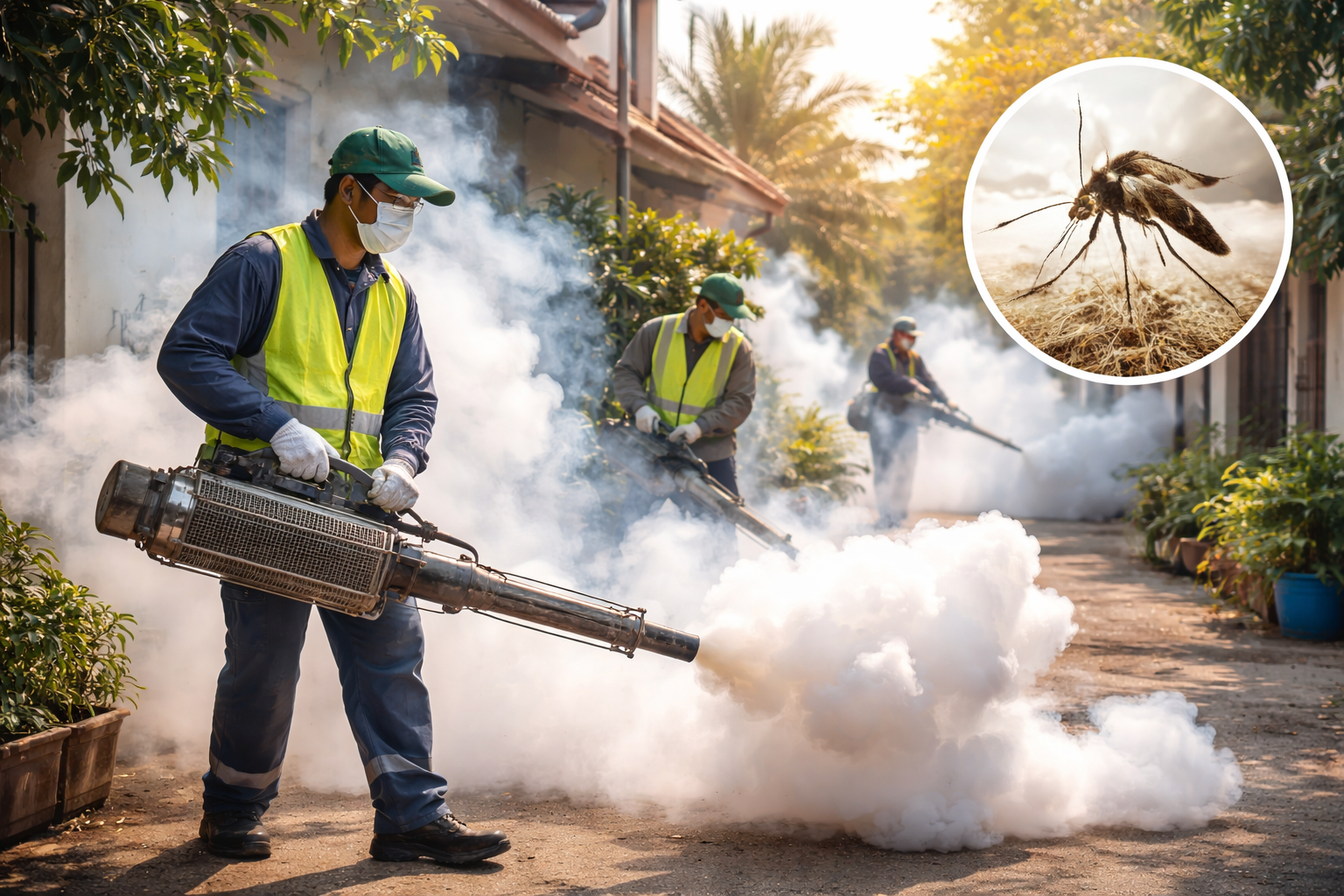
Municipal authorities have intensified mosquito-control measures across several neighbourhoods following a rise in seasonal fever cases linked to mosquito-borne diseases. Health officials say the increase in mosquito density during humid and rainy periods often leads to higher risks of infections such as dengue, malaria, and chikungunya.
As part of the preventive campaign, civic teams have stepped up fogging operations, larvicide spraying, and door-to-door inspections to identify stagnant water sources where mosquitoes breed. Workers are also inspecting drains, water tanks, construction sites, and abandoned containers that may collect rainwater. These efforts aim to eliminate mosquito larvae before they mature and spread disease.
Authorities have also launched community awareness programs urging residents to keep their surroundings clean and remove standing water from rooftops, flowerpots, and discarded containers. Public health officials emphasize that preventing stagnant water is one of the most effective ways to reduce mosquito populations.
Health departments in several regions have reported seasonal increases in vector-borne illnesses, prompting governments to strengthen surveillance and testing programs to detect infections early and respond quickly.
Experts note that weather conditions such as rainfall, humidity, and temperature significantly influence mosquito breeding patterns. Warm and wet environments create ideal conditions for rapid mosquito reproduction, which increases the risk of disease transmission.
Municipal officials say the intensified mosquito-control campaign will continue over the coming weeks, with additional monitoring teams deployed in high-risk areas. Residents are encouraged to cooperate with field workers and report mosquito breeding spots to local authorities to help prevent further outbreaks.News as Reported.