

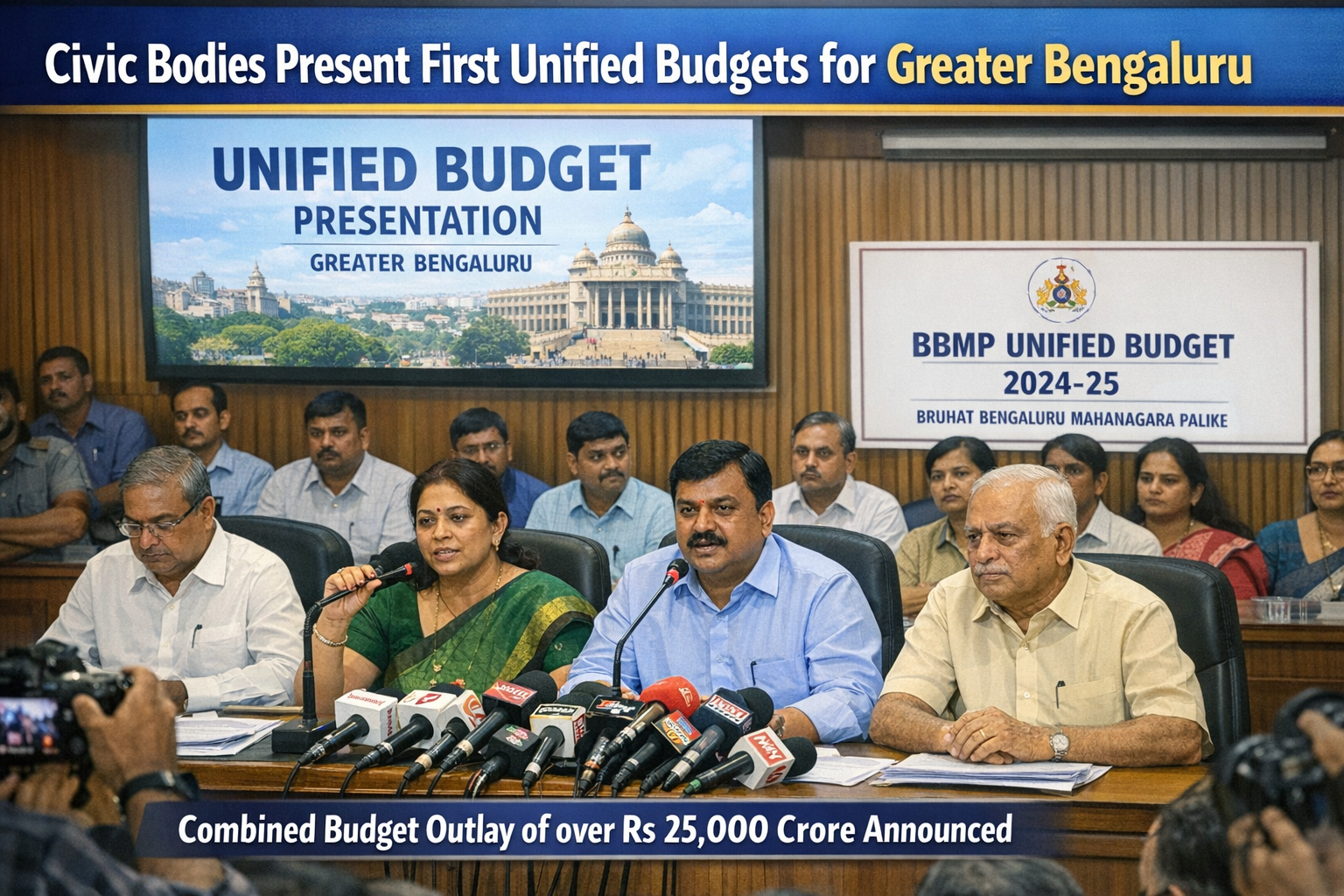
In a significant administrative development, Bengaluru’s newly formed civic structure under the Greater Bengaluru Authority (GBA) has begun presenting its first set of coordinated budgets. This marks a major step toward streamlined governance and improved urban management in the rapidly growing city.
The budgets are being presented by five newly structured civic corporations—East, South, North, Central, and West—over a span of two days. This staggered rollout reflects an effort to ensure systematic planning and coordinated execution across different regions of Bengaluru.
Officials believe that this new governance model will help address long-standing issues such as infrastructure gaps, traffic congestion, and inefficient service delivery. By decentralizing administration while maintaining overall coordination, the GBA aims to improve responsiveness to local needs.
Each corporation is expected to focus on region-specific priorities, including road development, waste management, water supply, and urban mobility. The move is also seen as a step toward greater financial transparency, with individual budgets allowing better tracking of funds and expenditures.
Urban experts suggest that if implemented effectively, this model could significantly enhance Bengaluru’s governance efficiency. However, challenges remain in ensuring coordination among multiple bodies and avoiding bureaucratic overlaps.
The introduction of unified yet decentralized budgeting marks a new chapter in Bengaluru’s civic administration, with expectations high for improved urban services and infrastructure development in the coming years.
News as reported