

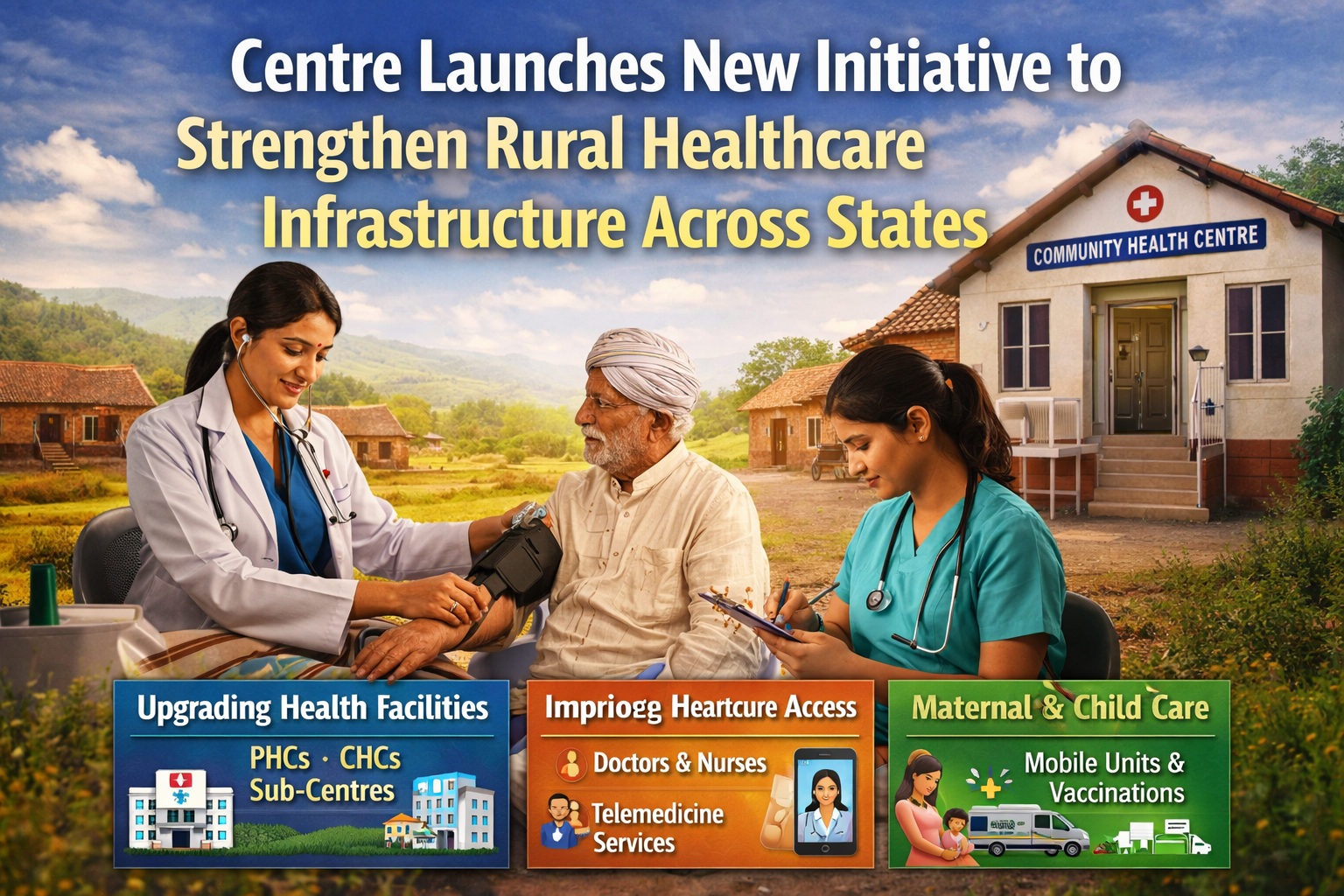
The central government has introduced a new nationwide initiative aimed at strengthening rural healthcare infrastructure and improving access to quality medical services across states. This move is part of a broader effort to bridge the urban-rural healthcare gap and ensure that essential health services reach even the most remote regions of the country.
The initiative focuses on upgrading existing primary health centres (PHCs), community health centres (CHCs), and sub-centres with better facilities, modern medical equipment, and improved staffing. Special emphasis is being placed on increasing the availability of trained doctors, nurses, and healthcare workers in rural areas, along with the integration of telemedicine services to connect patients with specialists in urban centres.
In addition, the government plans to invest in mobile medical units, digital health infrastructure, and emergency response systems to enhance healthcare delivery. The initiative also includes provisions for maternal and child healthcare, vaccination programs, and the management of chronic diseases, which are often underserved in rural communities.
Collaboration with state governments plays a crucial role in the implementation of this program, ensuring that region-specific healthcare challenges are addressed effectively. Financial support and policy guidance from the Centre are expected to accelerate the development of healthcare facilities at the grassroots level.
This initiative is anticipated to improve overall public health outcomes, reduce the burden on urban hospitals, and create employment opportunities in the healthcare sector. By strengthening rural healthcare infrastructure, India aims to build a more inclusive and resilient healthcare system for the future news as reported.


- upgraderz.aws@gmail.com
- upgraderz.aws@gmail.com
- upgraderz.aws@gmail.com
- upgraderz.aws@gmail.com