

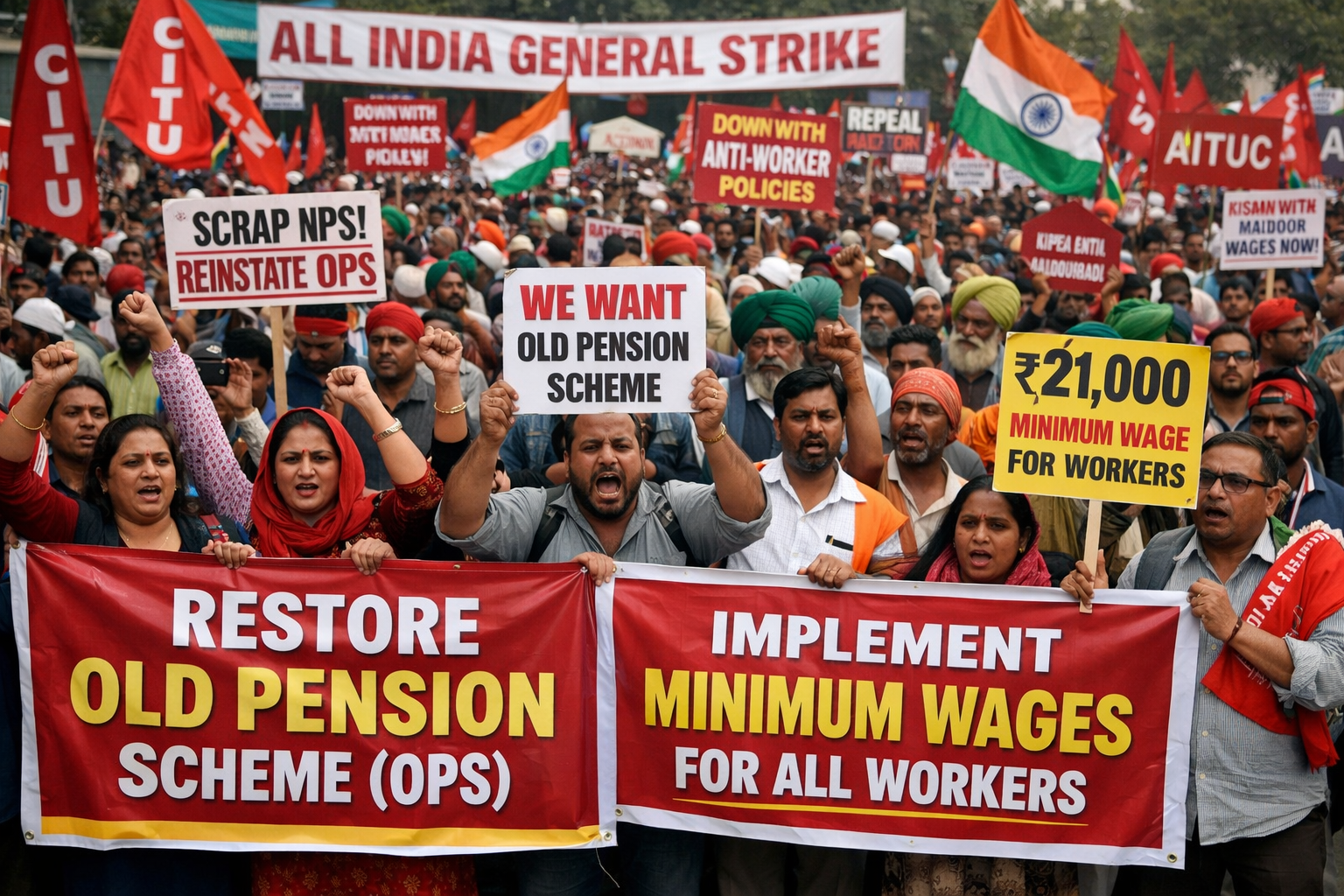
Demands for the restoration of the Old Pension Scheme (OPS) and enforcement of stronger minimum wage protections have gained momentum during the ongoing nationwide protests led by trade unions and farmers’ groups. Protesters across several states have placed pension security and fair wages at the center of their agitation, calling these measures essential for worker dignity and long-term social protection.
Employee unions representing government staff, public sector workers, and organized labour say the shift from the Old Pension Scheme to contributory pension systems has increased financial uncertainty after retirement. They argue that OPS provided predictable post-retirement income and inflation-linked benefits, while newer systems expose employees to market-linked risks. Demonstrators are urging both central and state authorities to reinstate OPS or introduce equivalent guaranteed-benefit models.
Alongside pension demands, unions are pressing for a legally enforceable national minimum wage floor and timely revisions tied to inflation. Worker representatives say current wage levels in many sectors do not adequately match rising living costs, especially for contract and informal workers. They are also seeking stricter compliance checks and penalties for wage violations.
Rallies, memorandums, and coordinated strike actions have highlighted these issues during the protest period, with slogans and campaigns focused on social security and income stability. Organizers describe the response from workers as widespread and growing.
Government representatives have said pension and wage policies must balance fiscal sustainability with welfare goals, and that discussions with stakeholders can continue through formal dialogue channels. Protest groups, however, say they will maintain pressure until concrete policy assurances are announced news as reported.


- upgraderz.aws@gmail.com
- upgraderz.aws@gmail.com
- upgraderz.aws@gmail.com
- upgraderz.aws@gmail.com