

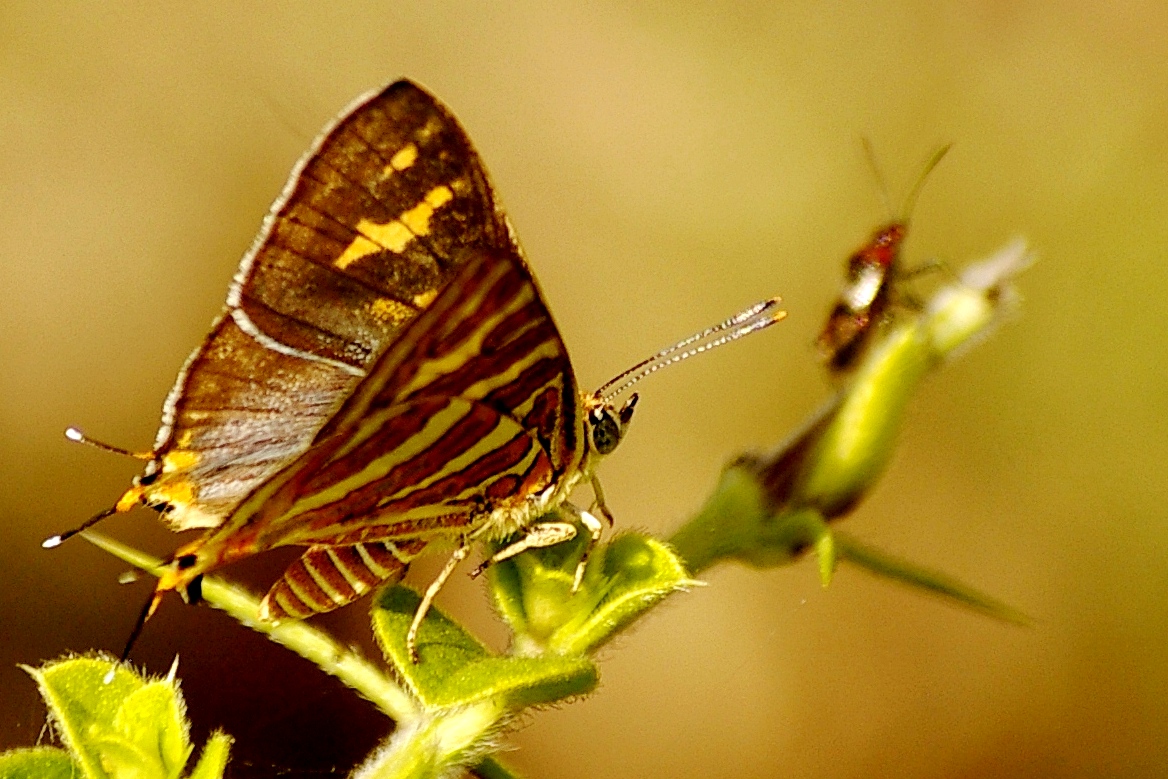
The Common Silverline (Spindasis vulcanus), a small yet remarkable butterfly from the Lycaenid family, is drawing attention for its unique survival strategies and lifecycle. Found across parts of South Asia, this species demonstrates fascinating adaptations beginning from its caterpillar stage.
The caterpillar constructs a protective nest by rolling leaves, creating a safe shelter where it feeds on the inner leaf surface. This cleverly designed habitat not only provides food but also shields it from predators. Even during its transformation, the pupa remains concealed within the same leafy enclosure, ensuring continued protection.
What truly sets the Common Silverline apart, however, is its ingenious defense mechanism as an adult butterfly. Its hindwings are designed to mimic a false head, complete with eye-like spots and tail-like extensions that resemble antennae. These “false antennae” are often in motion, tricking predators into attacking the less vital rear end instead of the actual head—greatly increasing its chances of survival.
First documented in 1775 by renowned Danish zoologist Johan Christian Fabricius, the Common Silverline continues to intrigue scientists and nature enthusiasts alike. Its combination of architectural skill, camouflage, and deception highlights the extraordinary ways in which even the smallest creatures adapt to thrive in the wild.
CONTRIBUTION BY VINCENT MASH — FORMER
EDITOR OF PHOTOWIDE MAGAZINE AND ASSOCIATE EDITOR OF PHOTO TRACK MAGAZINE