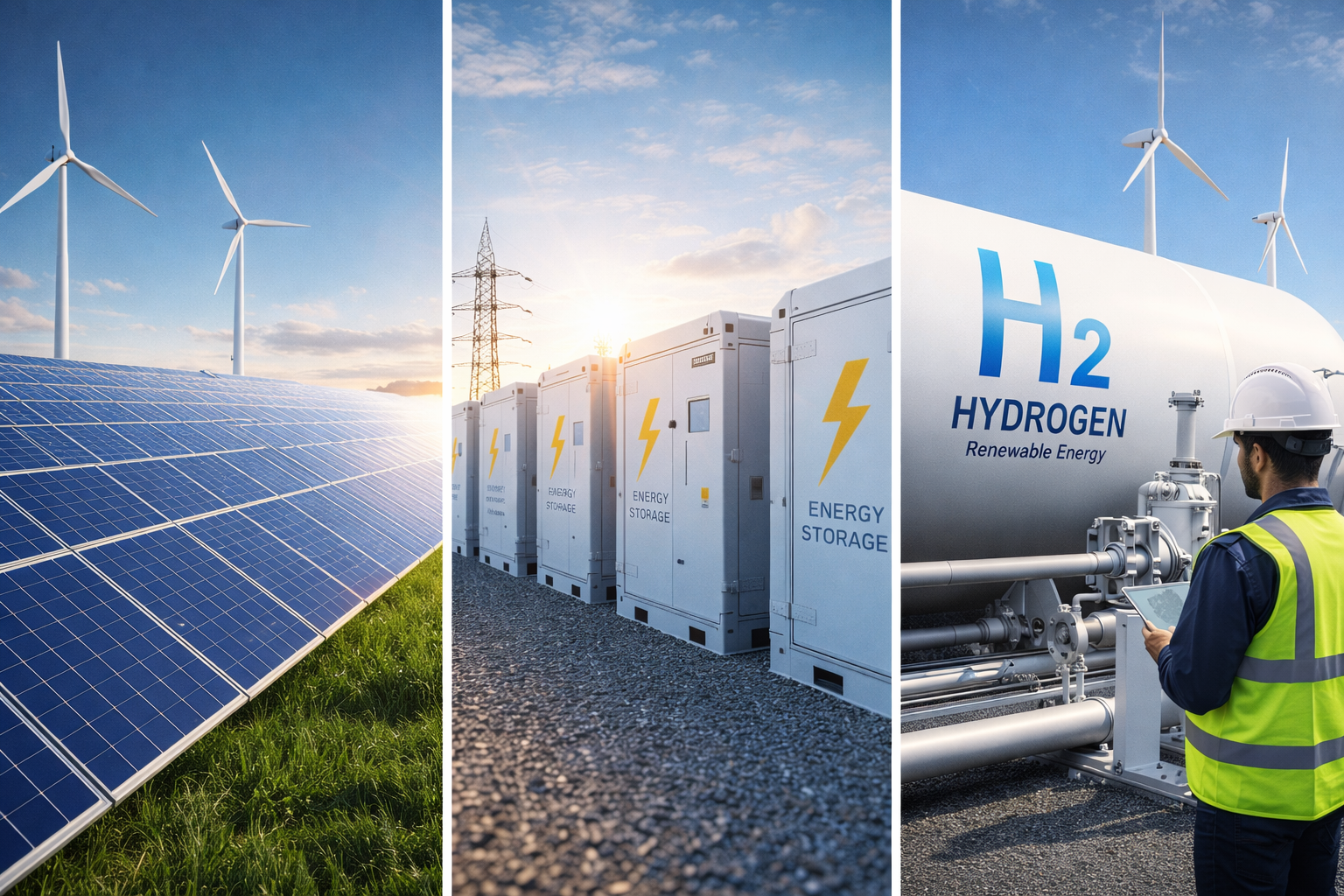
Several recent advancements in renewable energy storage technologies have sparked fresh optimism about meeting global climate goals by enabling more reliable, flexible, and affordable clean power systems. Central to this shift is the rapid expansion of grid-scale battery energy storage systems (BESS), which are critical for balancing variable solar and wind generation and ensuring power remains available even when weather conditions fluctuate. According to industry data, global grid-connected BESS deployments have risen markedly in 2025, with year-on-year growth continuing strong across China, Europe, and North America. This expansion signals that storage is quickly becoming core infrastructure rather than a niche technology.
In addition to conventional lithium-ion solutions, emerging technologies like new modular storage systems, long-duration energy storage designs, and sustainable alternatives (including sodium-ion and compressed-air systems) are gaining traction, offering pathways to reduce costs and extend storage duration beyond a few hours. These innovations could make 24/7 renewable power increasingly realistic—even in grids previously reliant on fossil fuel backup.
Policy and investment trends reflect this momentum: major markets are accelerating storage deployment through supportive funding, regulatory reforms, and expanded manufacturing capacity, especially in places like India where battery storage incentives are being scaled up to integrate more renewable energy into the grid.