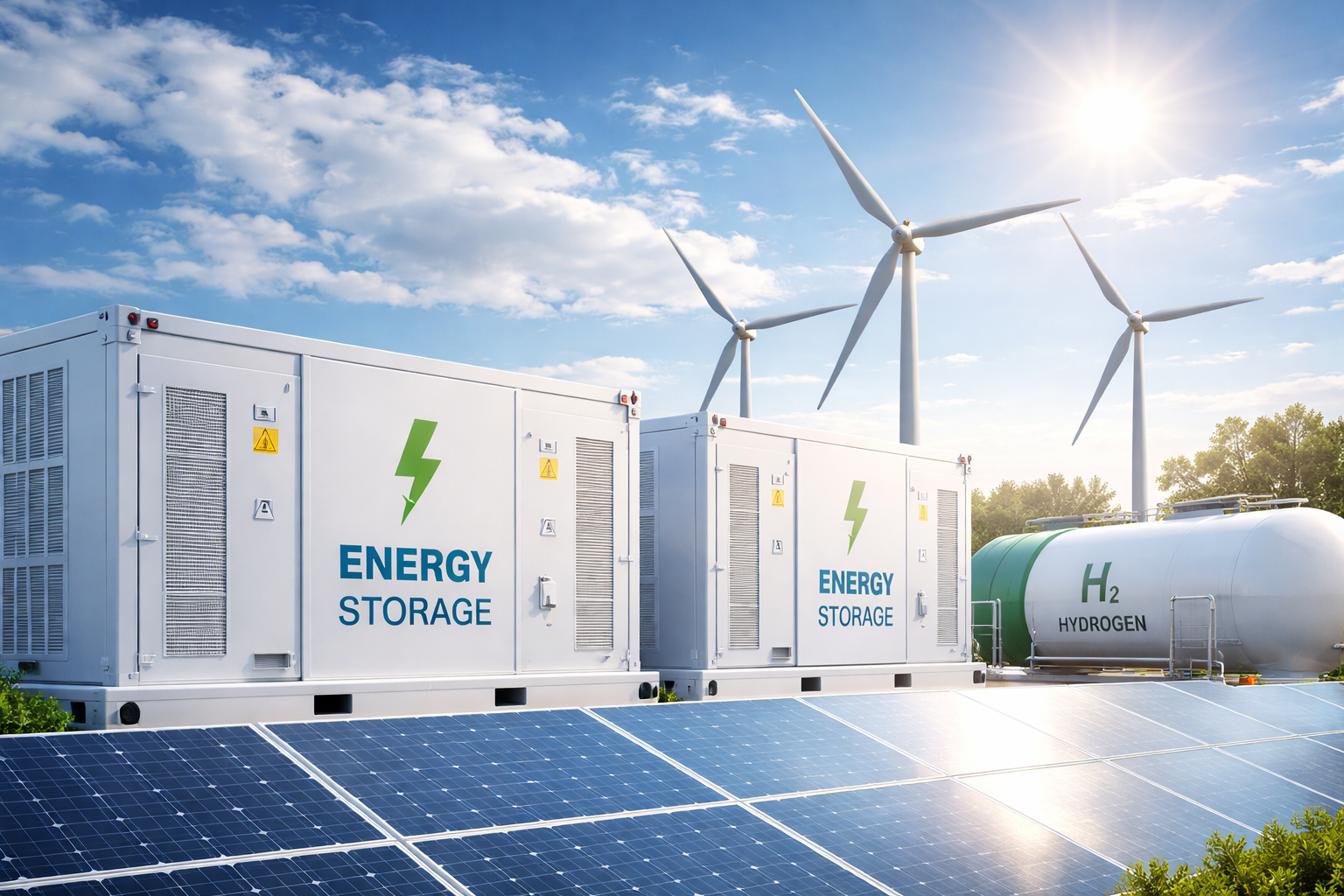
International researchers have announced a significant breakthrough in renewable energy storage technology, potentially solving one of the biggest challenges facing the global transition to clean energy. The innovation focuses on next-generation battery and energy-storage systems designed to store renewable power from sources such as solar and wind more efficiently and release it when needed.
Recent studies highlight multiple emerging technologies that could transform energy storage. One promising development is a prototype quantum battery created by scientists in Australia, which uses quantum physics to absorb energy extremely quickly and store it more efficiently than traditional batteries. Researchers say the system demonstrates a “super-absorption” effect, allowing much faster charging speeds while becoming more efficient as it scales up.
Another breakthrough involves new polymer-based materials developed by scientists that could significantly improve the storage and transfer of renewable energy. These advanced materials may also support the production and storage of green hydrogen, a clean fuel that can be generated using renewable electricity.
Meanwhile, other research groups are experimenting with alternative battery chemistries, including calcium-ion and sodium-ion technologies. These designs aim to reduce reliance on lithium while improving energy density, safety, and affordability for large-scale energy storage systems.
Energy experts say these innovations are crucial because renewable energy sources are naturally intermittent—solar panels only produce power during daylight hours, and wind turbines depend on weather conditions. Efficient storage solutions allow excess electricity to be saved and released during peak demand, stabilizing power grids and ensuring reliable energy supply.
Industry analysts believe breakthroughs in energy storage could accelerate the global transition away from fossil fuels. As technologies mature and costs decrease, next-generation storage systems may enable countries to run larger portions of their electricity grids on renewable energy while maintaining stability and reliability.
If commercialized successfully, these innovations could reshape the global energy landscape, making renewable power more dependable and accessible for households, industries, and entire national grids.News as Reported.