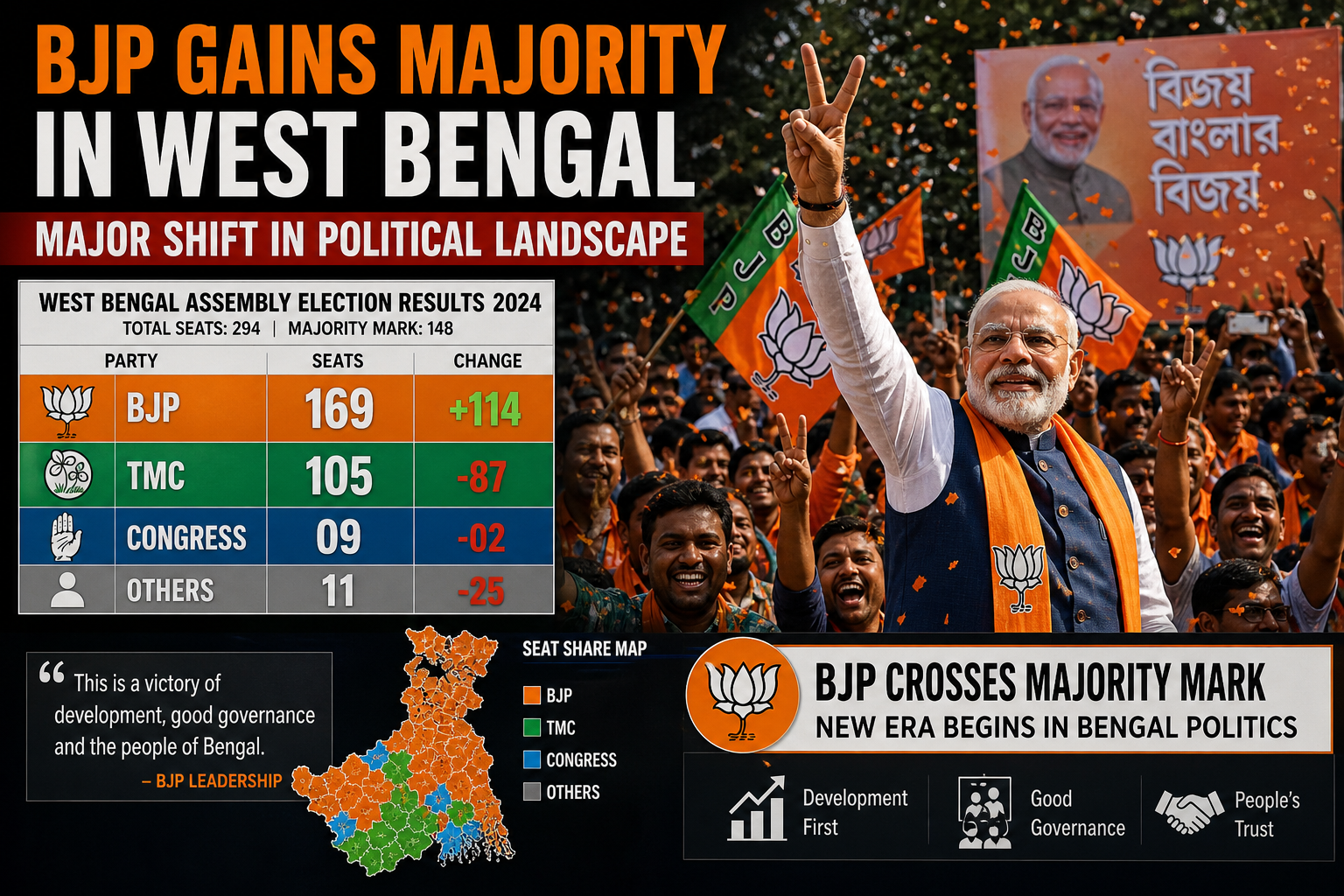
In a significant political development, the Bharatiya Janata Party (BJP) has secured a clear majority in West Bengal, marking a historic shift in the state’s political landscape. The results come after an intense and closely watched assembly election, where voter turnout remained high and campaigning was fiercely competitive.
The BJP’s victory signals a major breakthrough in a state that has long been dominated by regional parties, particularly the All India Trinamool Congress (TMC). Political analysts describe this outcome as a turning point, reflecting changing voter preferences and growing support for national-level leadership within the state.
Throughout the campaign, key issues such as development, employment, infrastructure, and governance played a crucial role in influencing voters. The BJP’s strategy of aggressive grassroots campaigning and strong organizational presence appears to have paid off, allowing it to expand its voter base across both urban and rural constituencies.
Meanwhile, the TMC faces a significant setback, prompting internal reviews and discussions about future strategies. Party leaders have acknowledged the results and emphasized the need to reconnect with the electorate.
Supporters of the BJP have begun celebrations across various parts of the state, while security remains tight to ensure peace and order. As the new government prepares to take charge, expectations are high regarding policy changes and development initiatives.
This election result is expected to have wider implications for national politics, reshaping alliances and influencing upcoming electoral battles across the country.