


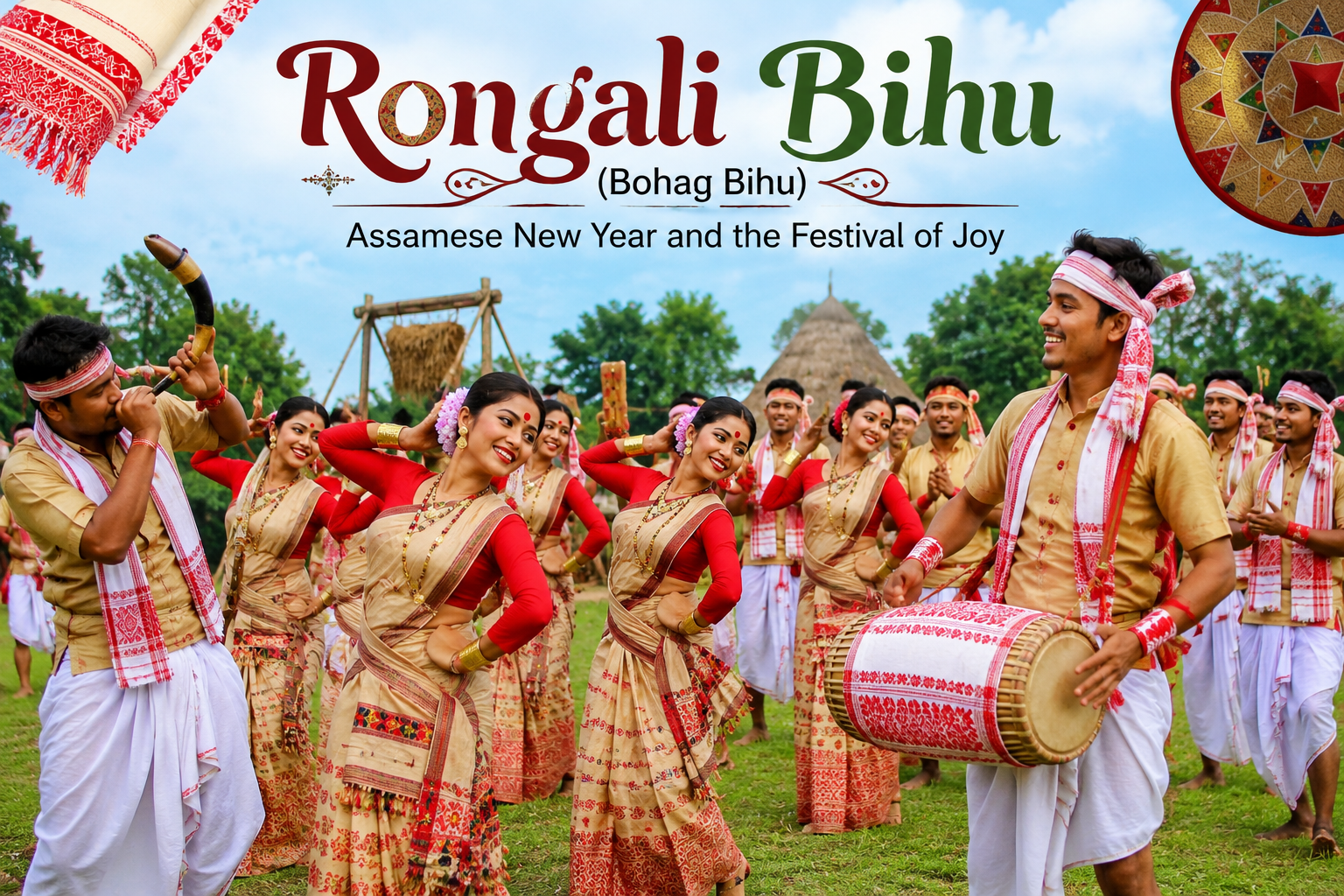
Rongali Bihu, also known as Bohag Bihu, is the most celebrated festival of Assam and marks the beginning of the Assamese New Year. Celebrated every year in mid-April, it welcomes the arrival of spring and the start of the agricultural season. As one of the three Bihu festivals observed in Assam, Rongali Bihu is the most vibrant and joyful, symbolizing hope, prosperity, and renewal. It is a time when people come together to celebrate nature, culture, and community.
The festival has deep agricultural roots, as it coincides with the sowing season. Farmers offer prayers for a successful harvest, while families clean and decorate their homes to welcome the New Year with positivity and happiness. The celebrations usually last for several days, with each day dedicated to different customs, rituals, and social gatherings.
One of the highlights of Rongali Bihu is the energetic Bihu dance, performed by young men and women dressed in traditional Assamese attire. Women wear the elegant Mekhela Chador, while men dress in dhotis and colorful Gamosas, the iconic handwoven cloth of Assam. The celebrations are brought to life by the rhythmic beats of the dhol (drum), the melodious sound of the pepa (buffalo horn pipe), and the gogona, a traditional bamboo musical instrument.
Food is another important part of the festival. Families prepare delicious Assamese delicacies such as pitha (rice cakes), laru (sweet coconut or sesame balls), and various homemade sweets. Sharing these traditional foods with relatives, neighbors, and guests reflects the spirit of hospitality and togetherness.
Today, Rongali Bihu is celebrated not only across Assam but also by Assamese communities around the world. The festival showcases the state’s rich cultural heritage through music, dance, traditional crafts, and community celebrations. More than just a harvest festival, Rongali Bihu is a celebration of life, unity, and the enduring traditions that define the vibrant identity of Assam.