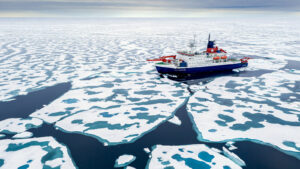
Arctic sea ice levels have dropped to their lowest point in 15 years, raising renewed concerns among climate scientists about the pace of warming in the polar regions. Satellite observations recorded a significant decline in ice coverage this season, continuing a long-term trend driven primarily by rising global temperatures.
Researchers warn that the rapid loss of Arctic ice could trigger a cascade of environmental consequences. Sea ice plays a crucial role in regulating the planet’s temperature by reflecting sunlight back into space. As ice cover diminishes, darker ocean waters absorb more heat, accelerating regional and global warming in a phenomenon known as the “albedo effect.”
The shrinking ice has also heightened risks for wildlife such as polar bears, seals, and migratory birds that rely on stable ice platforms for survival. Indigenous communities living in the Arctic are facing increasingly unpredictable conditions, affecting their traditional livelihoods and travel routes.
Scientists emphasize that without stronger global climate action, the Arctic could face even more dramatic changes in the coming decades. They urge policymakers to reduce greenhouse gas emissions and invest in climate resilience measures to slow the rate of polar ice decline and protect vulnerable ecosystems.