

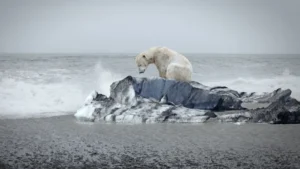
New research warns that Arctic permafrost thaw has passed a critical threshold, turning once-frozen soils into a major source of greenhouse gases. As rising Arctic temperatures — nearly four times the global average — destabilize permafrost, trapped organic carbon is decomposing and being released as carbon dioxide (CO₂) and methane (CH₄), intensifying global warming.
Recent findings show that vast permafrost regions that had acted as carbon sinks for millennia are now emitting more CO₂ than they absorb, even before accounting for additional methane from thawed soils. The thaw is especially pronounced along coastal zones where rising seas and erosion create “thermokarst lagoons,” which experiments reveal can produce up to 18 times more greenhouse gases than previously frozen land.
Scientists warn that this shift — from long-trusted carbon storage to active carbon release — could significantly accelerate climate change, undermining global efforts to limit warming. Because permafrost carbon feedbacks remain under-accounted in many climate policies, experts call for urgent inclusion of permafrost emissions in future climate strategies.
