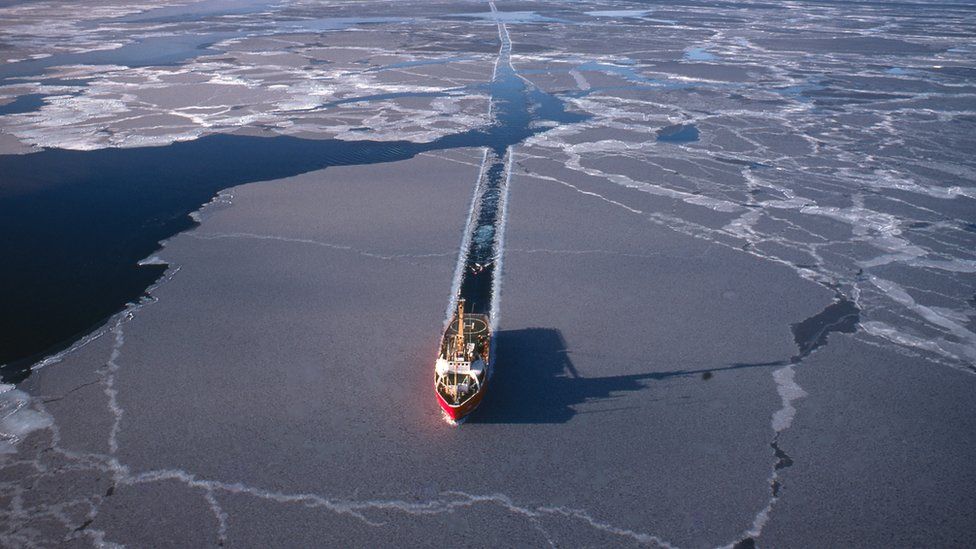
Scientists are warning that rising levels of “black carbon” pollution from expanding Arctic shipping traffic are speeding up ice melt and intensifying regional warming. Black carbon, commonly known as soot, is produced by the incomplete burning of fossil fuels in ship engines. When these tiny dark particles settle on snow and ice, they reduce the surface’s reflectivity, causing it to absorb more sunlight and melt faster.
As Arctic sea ice retreats due to climate change, new shipping routes are opening, leading to a sharp increase in marine traffic. Cargo vessels, cruise ships, and fuel tankers are now traveling through previously inaccessible waters, emitting pollutants that further worsen the problem. Researchers say this creates a dangerous feedback loop: less ice allows more ships, and more ships release more black carbon, accelerating ice loss.
The rapid melting not only contributes to global sea-level rise but also threatens fragile Arctic ecosystems and wildlife such as polar bears, seals, and seabirds that depend on sea ice for survival. Indigenous communities are also facing disruptions to their traditional ways of life.
Experts are calling for stricter international regulations, cleaner marine fuels, and the adoption of low-emission technologies to curb black carbon emissions. Without swift action, scientists warn the Arctic could experience faster warming than previously predicted, with consequences felt far beyond the polar region. News as reported