

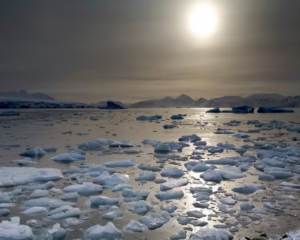
The annual ozone hole over Antarctica has shrunk to its smallest size since 2019, a major sign that the planet’s protective ozone layer is slowly recovering. According to data from NASA and NOAA, the 2025 ozone hole is the fifth-smallest recorded since 1992 — when the global phasing out of ozone-depleting chemicals began.
Between early September and mid-October, the ozone-depleted region averaged about 7.23 million square miles (≈ 18.7 million km²) — roughly twice the size of the continental United States. On September 9 the hole reached a one-day peak of 8.83 million square miles, still around 30% smaller than the largest hole ever recorded. Notably, it also began closing up nearly three weeks earlier than usual.
Scientists say this improvement largely reflects the long-term success of the Montreal Protocol and its amendments, which phased out ozone-depleting substances like CFCs. If current trends continue, the ozone layer could return to 1980s levels by the 2060s.
Nevertheless, experts warn that full recovery remains decades away — and that continued compliance and monitoring are essential to maintain this progress.
