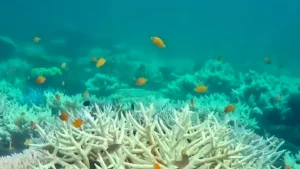
The world’s coral reefs are facing an unprecedented crisis as a major global coral-bleaching event from 2023 to 2025 has affected approximately 84% of reefs worldwide, marking the worst bleaching episode ever recorded. Marine scientists warn that the intensity and scale of this event are far beyond previous records, placing coral ecosystems under extreme stress.
Coral bleaching occurs when corals, stressed by rising sea temperatures, expel the symbiotic algae that give them color and energy. Without these algae, corals turn white, weaken, and are more vulnerable to disease and mortality. Experts attribute the severity of this bleaching wave to climate change, ocean warming, and extreme marine heatwaves, intensified by human-induced carbon emissions.
The impact on marine biodiversity is severe: coral reefs support thousands of fish species, protect coastlines from storms, and sustain the livelihoods of millions of people who depend on fisheries and tourism. Prolonged bleaching events threaten not only the survival of corals but also the broader health of ocean ecosystems and coastal economies.
Scientists stress that immediate global action is needed to reduce greenhouse gas emissions, protect remaining healthy reefs, and invest in coral restoration programs. Failure to act could lead to the collapse of these vital ecosystems, with far-reaching consequences for biodiversity and human communities alike.