

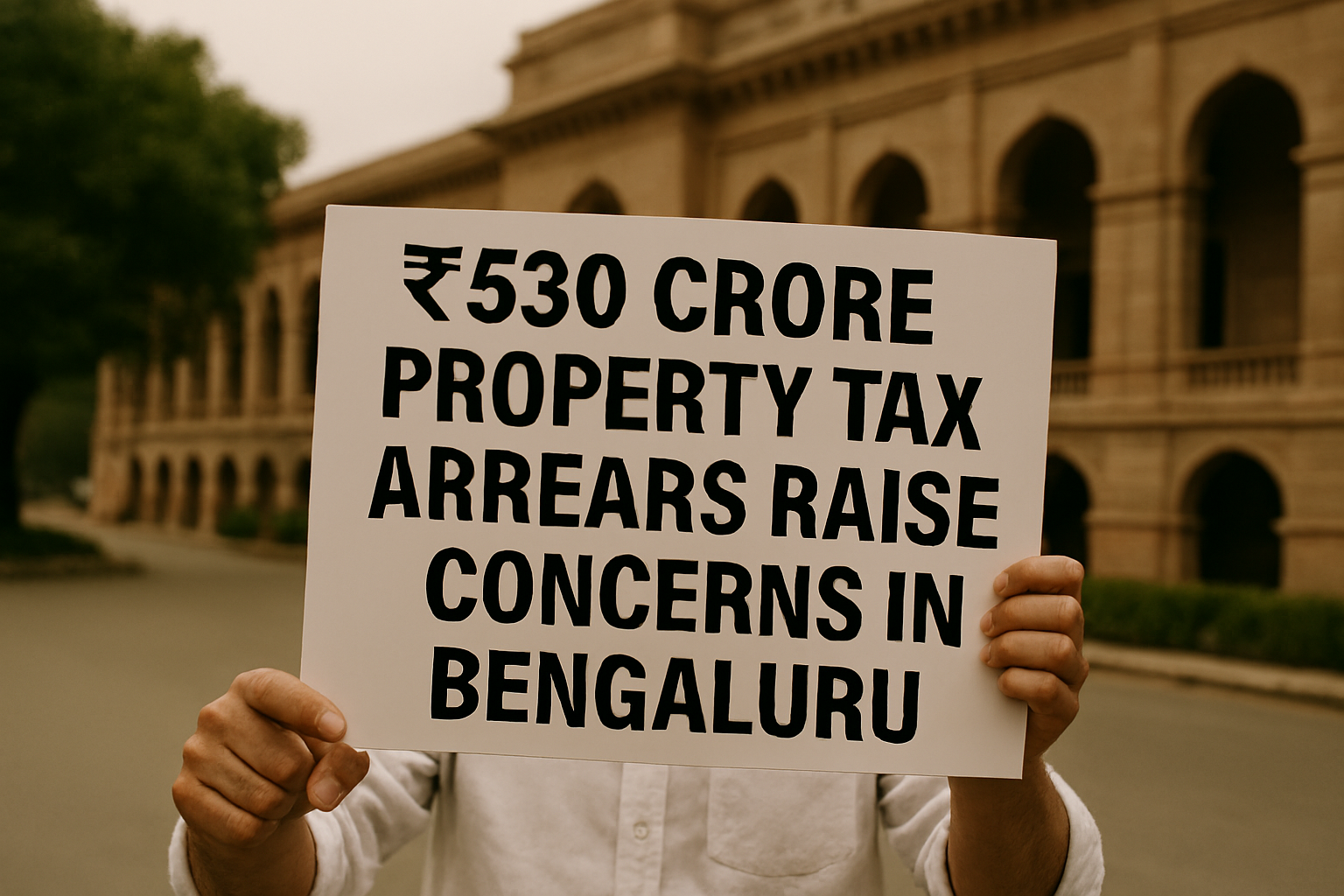
Bengaluru is facing a major civic challenge as authorities have identified over ₹530 crore in pending property tax dues from more than 1,000 defaulters. The issue has raised concerns about the city’s financial health and its ability to fund infrastructure and public services.
According to officials, a total of 1,013 properties have been flagged for non-payment of taxes. The scale of arrears poses a significant hurdle for revenue collection, especially at a time when the city requires substantial investment in urban development and maintenance.
The recently restructured civic administration under the Greater Bengaluru Authority (GBA) has intensified efforts to recover dues. Officials are exploring stricter enforcement measures, including penalties and legal action against chronic defaulters.
Experts believe that improving tax compliance is essential for sustaining Bengaluru’s growth. Property tax remains one of the primary revenue sources for urban local bodies, funding essential services such as road maintenance, waste management, and water supply.
The issue also reflects broader challenges in urban governance, including gaps in assessment, enforcement, and public awareness. Authorities are considering reforms to streamline tax collection processes and enhance transparency.
Civic groups have called for a balanced approach that combines strict enforcement with taxpayer-friendly measures. They argue that improving digital systems and simplifying procedures could encourage voluntary compliance.
As Bengaluru continues to expand, addressing revenue gaps will be crucial for ensuring sustainable development. The coming months are expected to see intensified recovery drives and policy measures aimed at strengthening the city’s financial base.
News as reported
