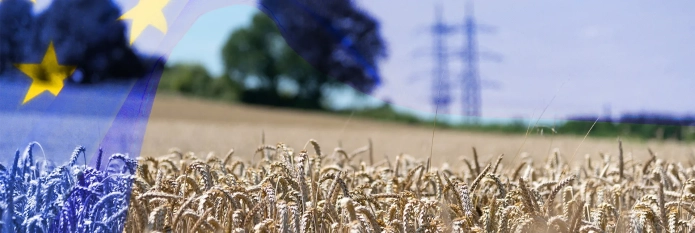
BRUSSELS — The European Union continues to build its climate policy framework aimed at cutting greenhouse gas emissions across all sectors, including agriculture, as part of its broader strategy toward climate neutrality by 2050. While the bloc has already enshrined legally binding climate targets — such as reducing net emissions by at least 55 % by 2030 — policymakers are discussing longer-term pathways that would see agriculture and land use contribute proportionately to mid-century climate goals and potentially reach net-zero or significantly reduced emissions by 2035.
Agriculture is among the hardest-to-abate sectors, with emissions largely tied to methane from livestock and nitrous oxide from soil and fertilizer use. Recent EU outlook documents underline that EU farms are projected to continue reducing their overall emissions and environmental footprint through improved practices and investment in sustainable farming technologies.
Under the European Green Deal framework, Commission strategies explicitly aim to integrate environmental sustainability into farming — promoting eco-schemes and innovation incentives that reward sustainable land use and emission-reducing practices. While a concrete EU-wide target specifically labelled for agriculture by 2035 has not yet been enacted as formal law, trend projections and internal policy reviews indicate momentum toward stronger agricultural climate commitments in the coming legislative cycles.
Critics of the bloc’s climate agenda argue that without clearly defined binding targets for methane and other agricultural emissions by 2035, progress will remain uneven across member states, and the sector may under-deliver on climate commitments. news as reported