

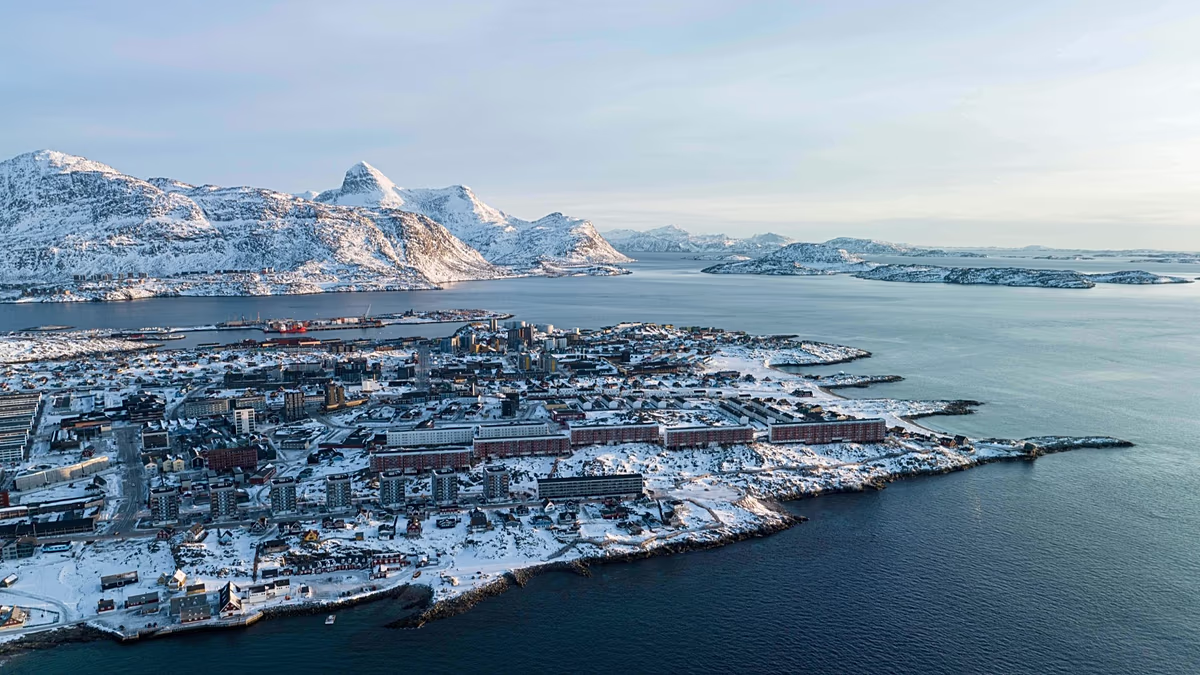
A new scientific study has revealed a striking climate paradox: while global sea levels continue to rise due to accelerating climate change, sea levels around Greenland are projected to fall over the coming decades. Researchers using satellite observations and advanced geophysical models found that melting of Greenland’s massive ice sheet is reshaping regional sea-level patterns in unexpected ways.
Globally, oceans are rising because warmer water expands and melting glaciers and ice sheets add more water to the seas. However, Greenland’s ice sheet currently exerts a powerful gravitational pull that draws ocean water toward it, raising sea levels along its coastline. As the ice melts and loses mass, that gravitational pull weakens, causing nearby water to migrate away.
At the same time, the land beneath the ice sheet — long compressed by its immense weight — is slowly rebounding upward in a process known as glacial isostatic adjustment. The combined effect leads to a relative drop in sea level around Greenland, even as the meltwater contributes to rising seas elsewhere.
Scientists stress that this regional decline does not reduce the global threat. Rising sea levels continue to endanger coastal cities and island nations worldwide, increasing risks of flooding, erosion, and storm surges in vulnerable regions. News as reported

- upgraderz.aws@gmail.com
- upgraderz.aws@gmail.com
- upgraderz.aws@gmail.com
- upgraderz.aws@gmail.com