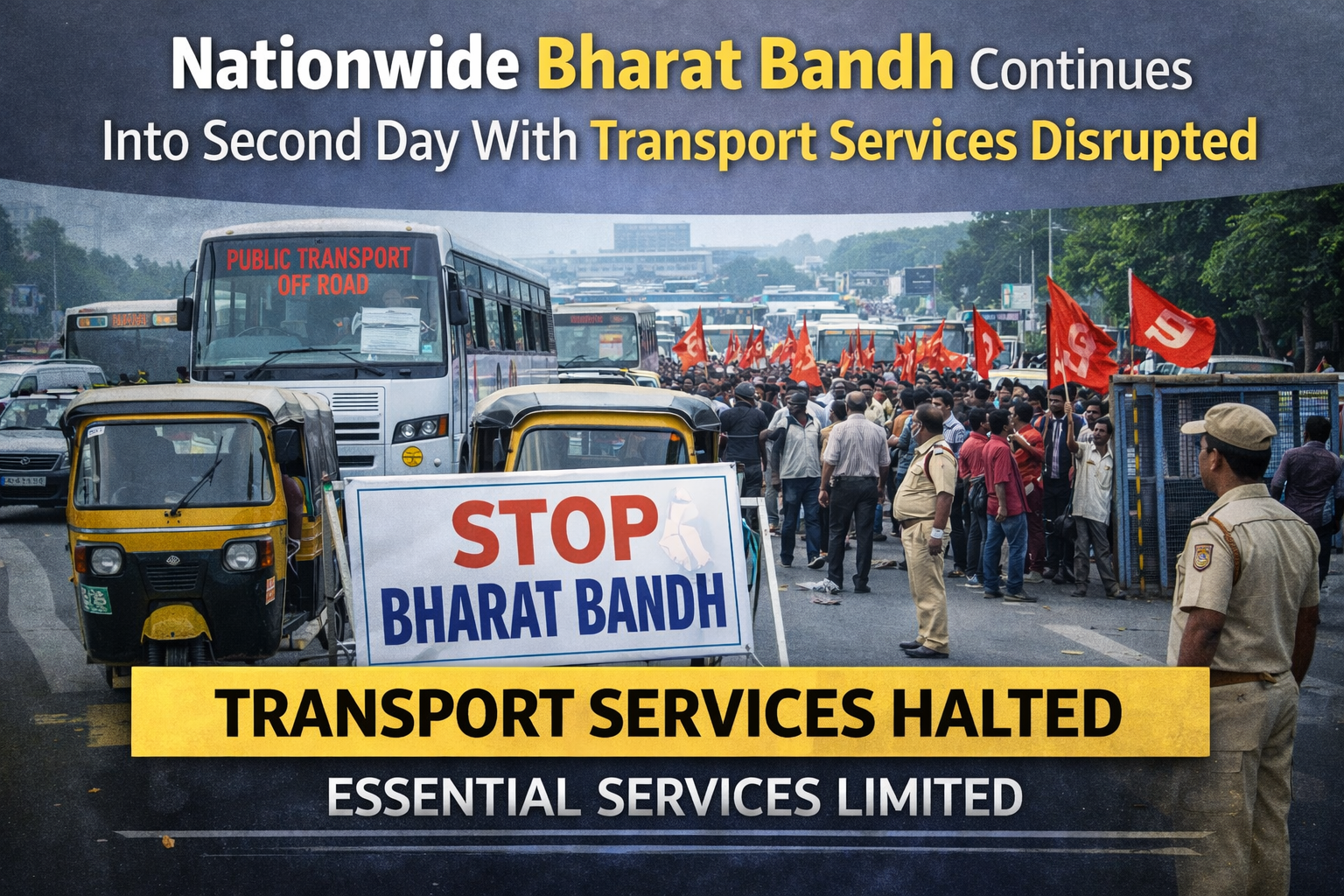
The nationwide Bharat Bandh entered its second consecutive day of disruption on Friday, impacting transport services, public life and daily commuting across several Indian states. The strike, called by more than 10 central trade unions and supported by farmers’ organisations, began on February 12 as a protest against recently introduced labour laws and government economic policies.
Public transport systems, including state buses, auto-rickshaws and taxis, remained off the roads in protest-hit regions such as Kerala, Odisha, Assam and West Bengal, leaving commuters stranded and roads unusually quiet. In Kerala, government and private buses stayed out of service, and many markets and local shops kept their shutters down in solidarity with the bandh.
While essential emergency services such as hospitals and ambulance operations continued, many routine activities were significantly affected. Government offices and banks reported limited attendance as union members stayed away, prompting worries about delayed services and public inconvenience.
State responses have varied, with some regions like Gujarat showing minimal impact where transport and commercial activity largely continued uninterrupted. Meanwhile, in Kerala, the ongoing strike brought a near-total shutdown in many districts, prompting police to organise emergency transportation to assist stranded passengers.
Authorities have issued advisories for travellers and commuters to anticipate delays, plan routes cautiously, and check real-time transport updates before travelling news as reported.