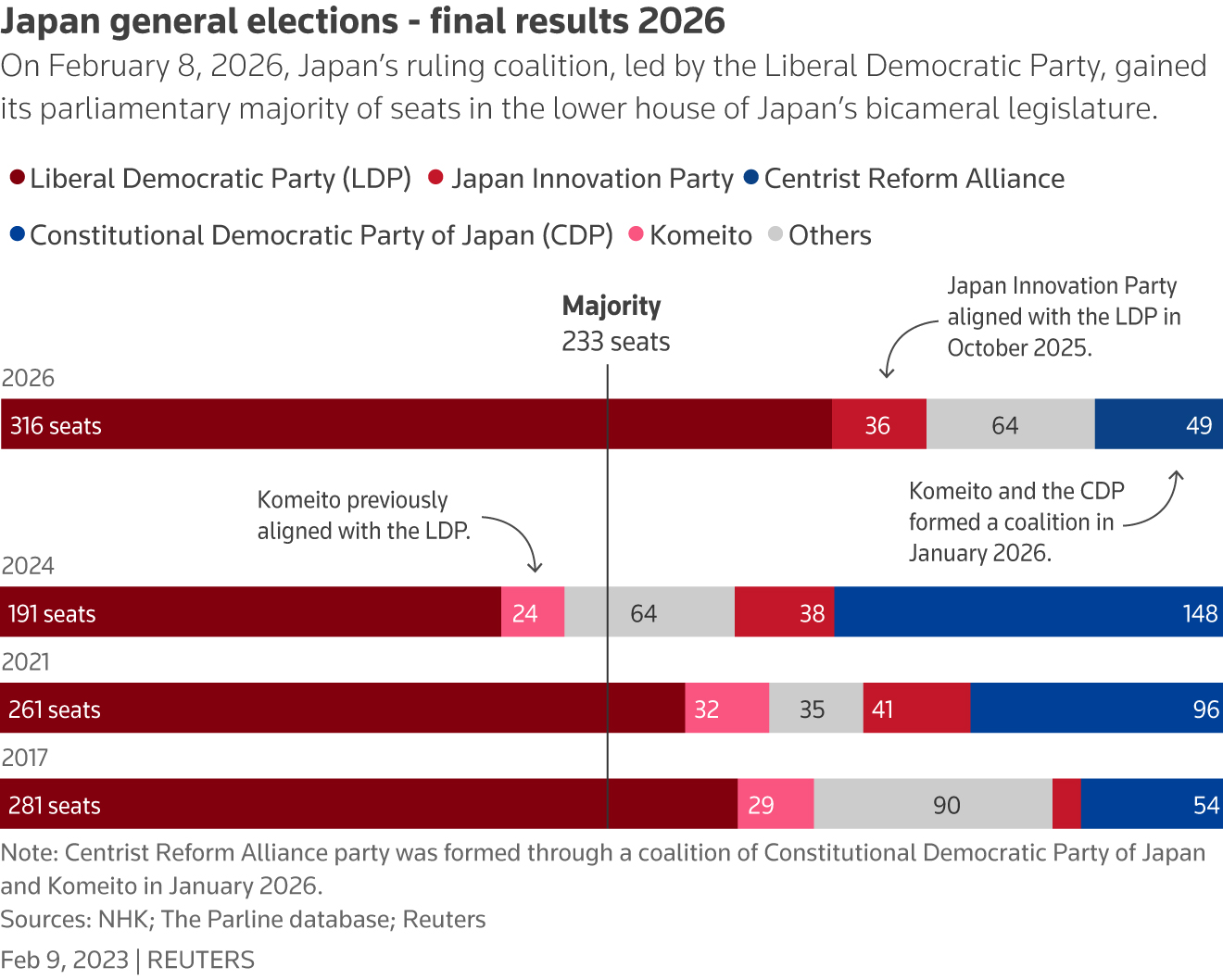
Japan’s Liberal Democratic Party (LDP), led by Prime Minister Sanae Takaichi, achieved a landslide victory in the recent general election, securing roughly 315–316 seats in the 465-member House of Representatives — enough for a two-thirds supermajority on its own.
Official results confirmed that the LDP’s success marks the party’s strongest showing in its postwar history, giving Takaichi unprecedented legislative power. With its coalition partner, the Japan Innovation Party, the ruling bloc commands well over the simple majority threshold of 233 seats, consolidating its grip on the lower house.
The decisive win was seen as a public endorsement of Takaichi’s policy agenda, which includes economic stimulus measures, proposed tax adjustments, and a focus on national security amid regional tensions. Analysts say the supermajority affords her government greater latitude to pursue key reforms and legislative priorities with reduced reliance on opposition parties.
The election was closely watched both domestically and internationally, with observers noting its potential implications for Japan’s fiscal strategy, defence posture, and diplomatic relations — particularly with partners such as the United States and neighbouring countries.
news as reported.