

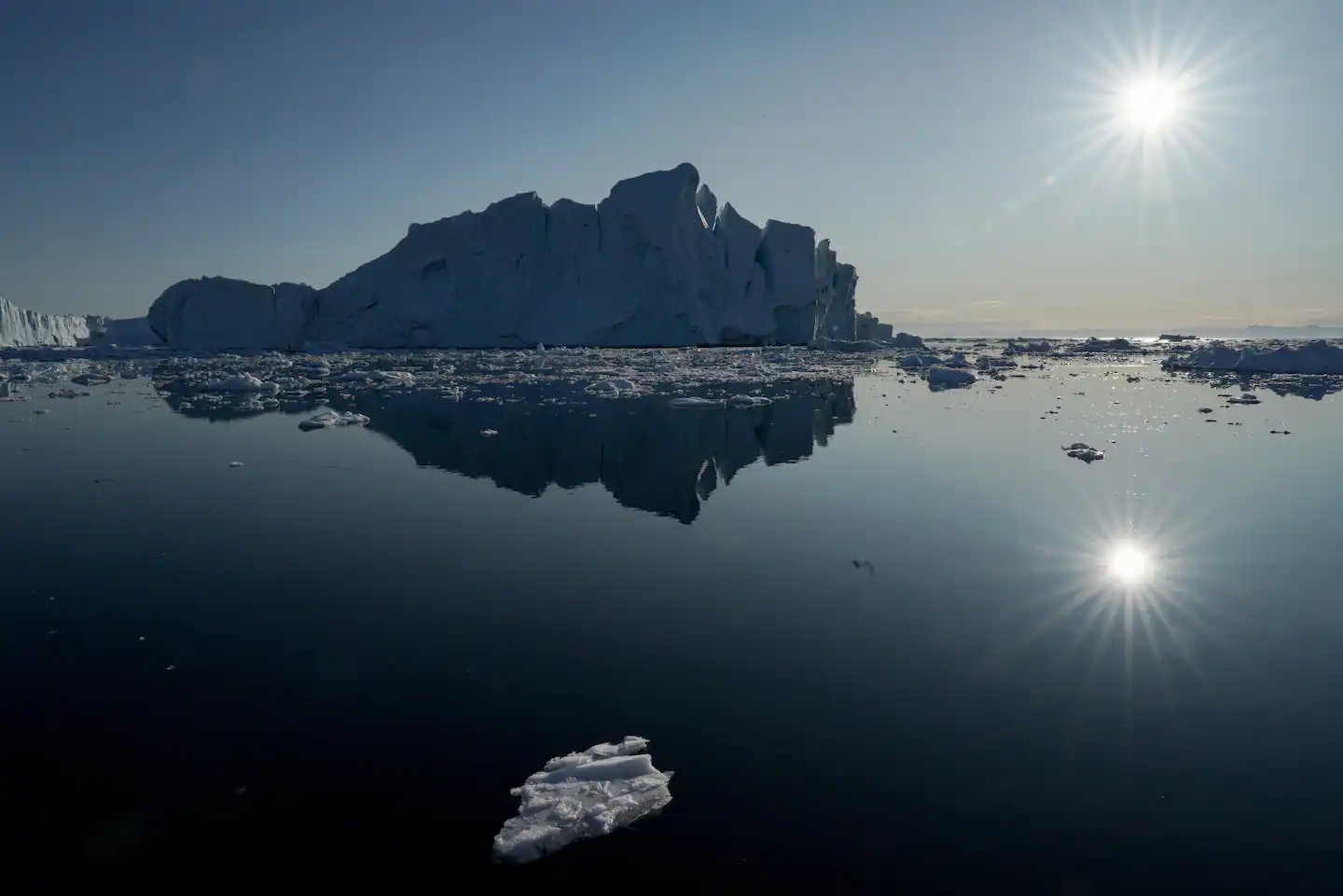
Scientists are raising alarms about accelerating instability in the Greenland ice sheet — the vast frozen heart of the Arctic that holds enough ice to raise global sea levels by more than 7 m if it were to melt completely. Recent research reveals that warming temperatures are not only causing widespread ice loss but also driving structural changes that could hasten future collapse.
Advanced satellite and 3-D mapping studies show that deep cracks and crevasses across the ice sheet are widening and deepening much faster than previously recorded. These fractures allow meltwater and heat to penetrate deeper into the ice, weakening its internal structure and potentially triggering a “domino effect” of accelerated melting.
Long-term monitoring also indicates that glaciers around Greenland’s edges are retreating more rapidly, releasing large amounts of ice into the ocean and contributing significantly to sea-level rise. Comprehensive analyses of satellite data suggest that Greenland has already lost substantial ice mass over recent decades, with the trend intensifying.
Researchers warn that continued warming could push the ice sheet toward thresholds of irreversible change. If greenhouse gas emissions remain high, models suggest Greenland may lose much more ice over the coming centuries, with profound implications for global sea levels, ocean circulation, and coastal communities. News as reported
