

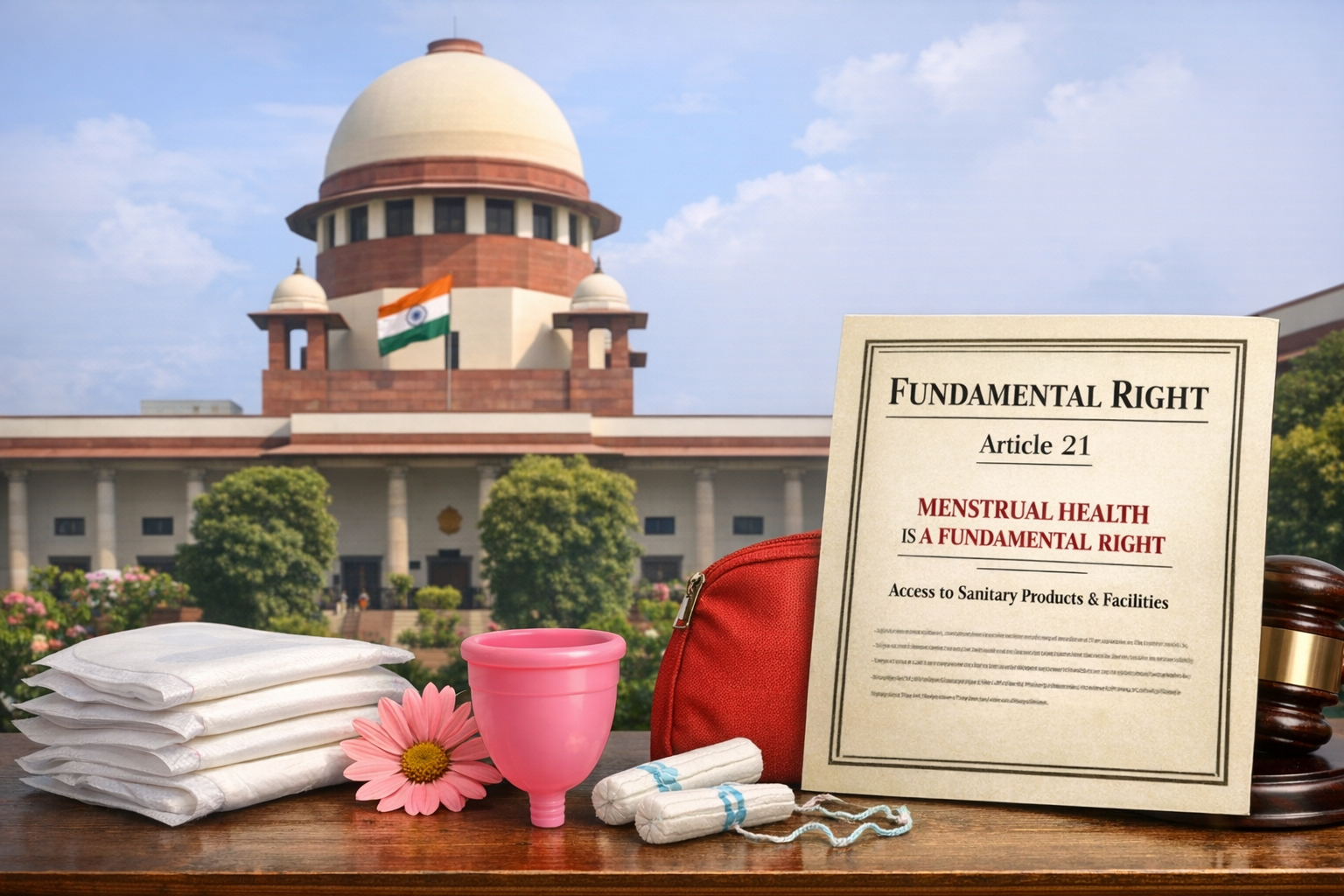
In a landmark step toward gender justice and public health reform, the Supreme Court has declared menstrual health to be a fundamental right protected under Article 21 of the Constitution, which guarantees the right to life and personal liberty. The ruling emphasizes that access to menstrual hygiene products, safe sanitation facilities, and accurate health education is not merely a welfare measure but a constitutional obligation tied to dignity, equality, and bodily autonomy.
The Court observed that menstrual health is directly connected to the rights to health, education, and safe working conditions. It noted that lack of access to sanitary products and hygienic infrastructure has long affected school attendance, workplace participation, and overall well-being of women and menstruating individuals, particularly in rural and economically weaker communities. By framing menstrual health within fundamental rights, the judgment strengthens the legal basis for nationwide policy action.
Authorities at the central and state levels are expected to expand distribution systems for affordable or free sanitary products, improve sanitation facilities in schools and public institutions, and support awareness campaigns to remove stigma around menstruation. The decision also encourages coordination between health, education, and women’s welfare departments for effective implementation.
Public health experts and rights advocates have welcomed the ruling, calling it a transformative move that shifts menstrual care from charity-driven programs to enforceable rights. The judgment is likely to influence future legislation, budgeting priorities, and institutional standards, marking a significant milestone in advancing menstrual equity and inclusive public health policy across the country news as reported.


- upgraderz.aws@gmail.com
- upgraderz.aws@gmail.com
- upgraderz.aws@gmail.com
- upgraderz.aws@gmail.com