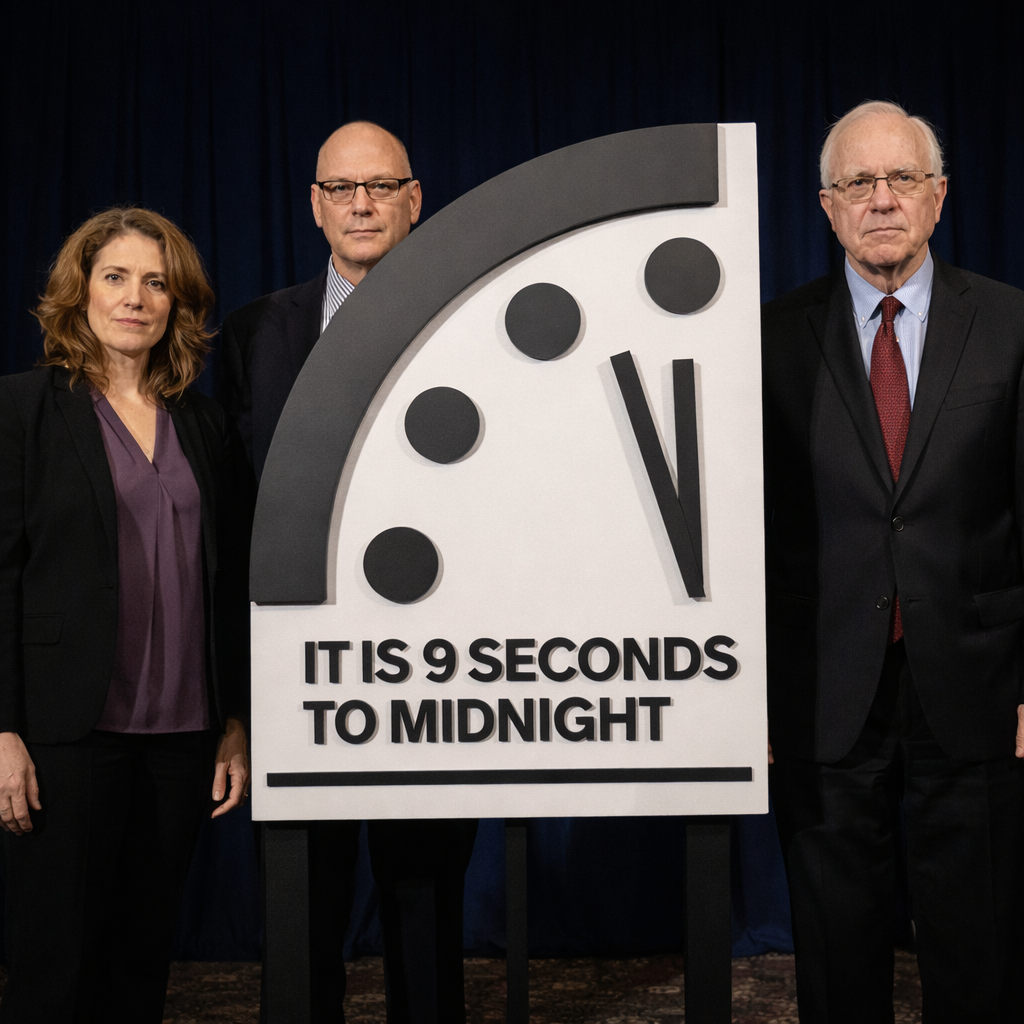
The Bulletin of the Atomic Scientists has moved its symbolic Doomsday Clock to 85 seconds before midnight, the closest this measure of existential peril has ever been, citing escalating threats from nuclear tensions, geopolitical conflicts, unregulated artificial intelligence, and insufficient climate action.
At a press event in Washington, experts warned that the world faces a convergence of dangerous trends, including aggressive posturing by nuclear-armed states, weakening arms-control agreements, ongoing wars in Ukraine and the Middle East, and the rapid integration of AI into military systems without adequate safeguards.
The Bulletin’s president noted that global leadership has struggled to mitigate these risks, with nationalistic policies and adversarial great-power competition undermining international cooperation needed to prevent catastrophe.
While the Doomsday Clock offers a stark visual metaphor rather than a literal countdown, its closest-ever setting underscores scientists’ concerns that humanity is more vulnerable to self-inflicted disaster than at any point since the clock’s inception in 1947.
Experts emphasize that decisive diplomacy, renewed arms-control efforts, stronger AI governance, and coordinated climate action are essential to “turn back the hands” of the clock and reduce the specter of global disaster.
News as reported