

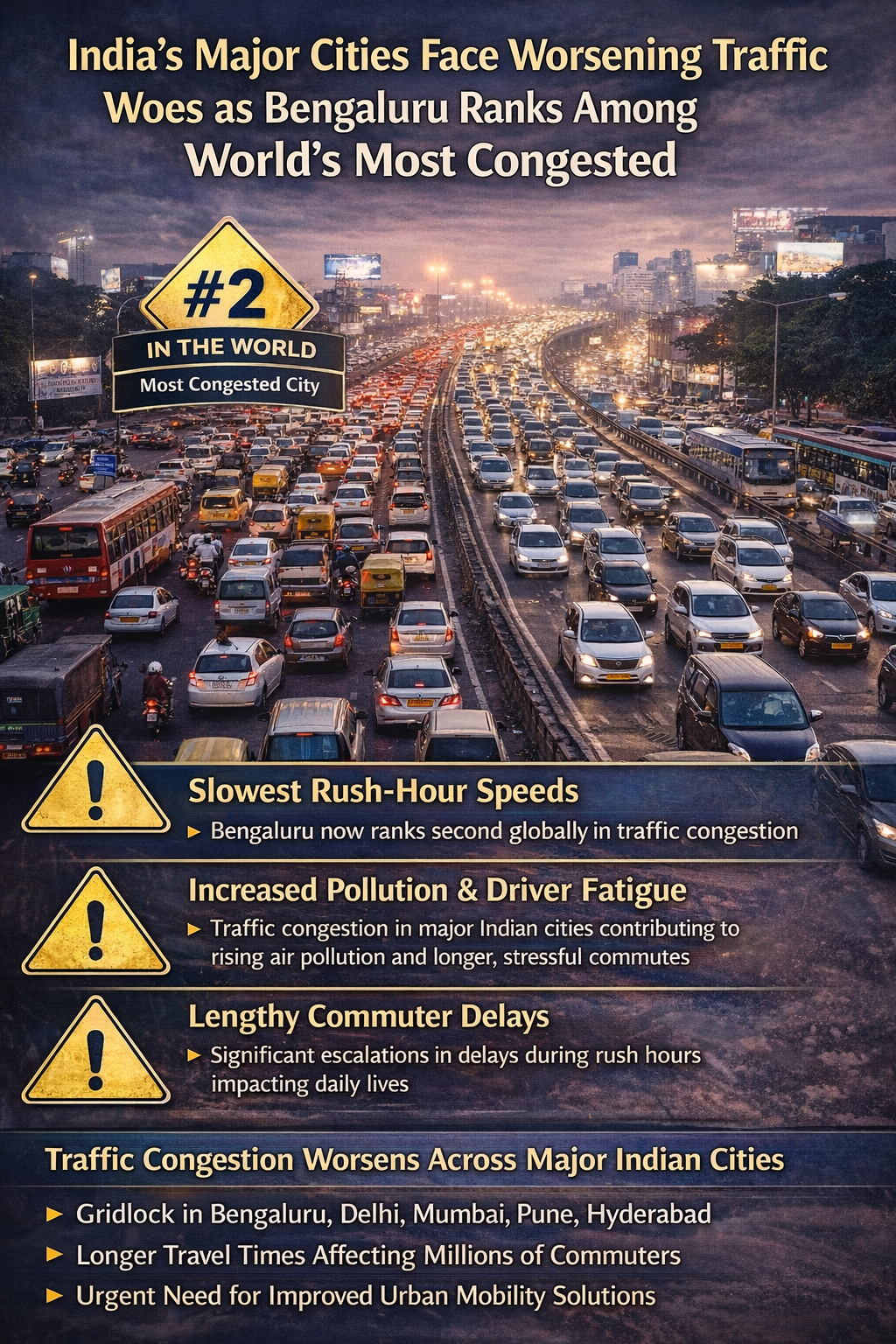
Traffic congestion across India’s major cities is worsening, with Bengaluru now ranking among the most congested cities globally, according to a recent study. The report highlights a steady decline in average rush-hour speeds and a sharp rise in commuter delays, underscoring the growing strain on urban transport infrastructure.
Bengaluru, often referred to as India’s technology hub, has seen traffic conditions deteriorate significantly due to rapid urbanisation, population growth, and an increasing number of private vehicles on the roads. The study notes that commuters in the city spend a substantial portion of their day stuck in traffic, particularly during peak office hours, leading to lost productivity and increased stress levels. Other metropolitan cities such as Delhi, Mumbai, Pune, and Hyderabad have also reported worsening congestion, though Bengaluru’s figures place it among the most affected worldwide.
Experts point to several factors contributing to the problem, including inadequate road capacity, frequent construction work, limited last-mile public transport connectivity, and a slow shift away from private vehicle usage. Ride-hailing services and delivery vehicles have further added to traffic density in commercial and residential areas.
The report also highlights the broader impact of congestion, including higher fuel consumption, rising air pollution, and negative effects on public health. Urban planners and transport experts have stressed the urgent need for integrated mobility solutions, such as expanding metro and bus networks, improving traffic management systems, and encouraging flexible work hours and remote working models.
As India’s cities continue to grow, the study warns that without timely interventions and long-term planning, traffic congestion could further worsen, affecting economic efficiency and overall quality of urban life for millions of commuters news as reported.


- upgraderz.aws@gmail.com
- upgraderz.aws@gmail.com
- upgraderz.aws@gmail.com
- upgraderz.aws@gmail.com