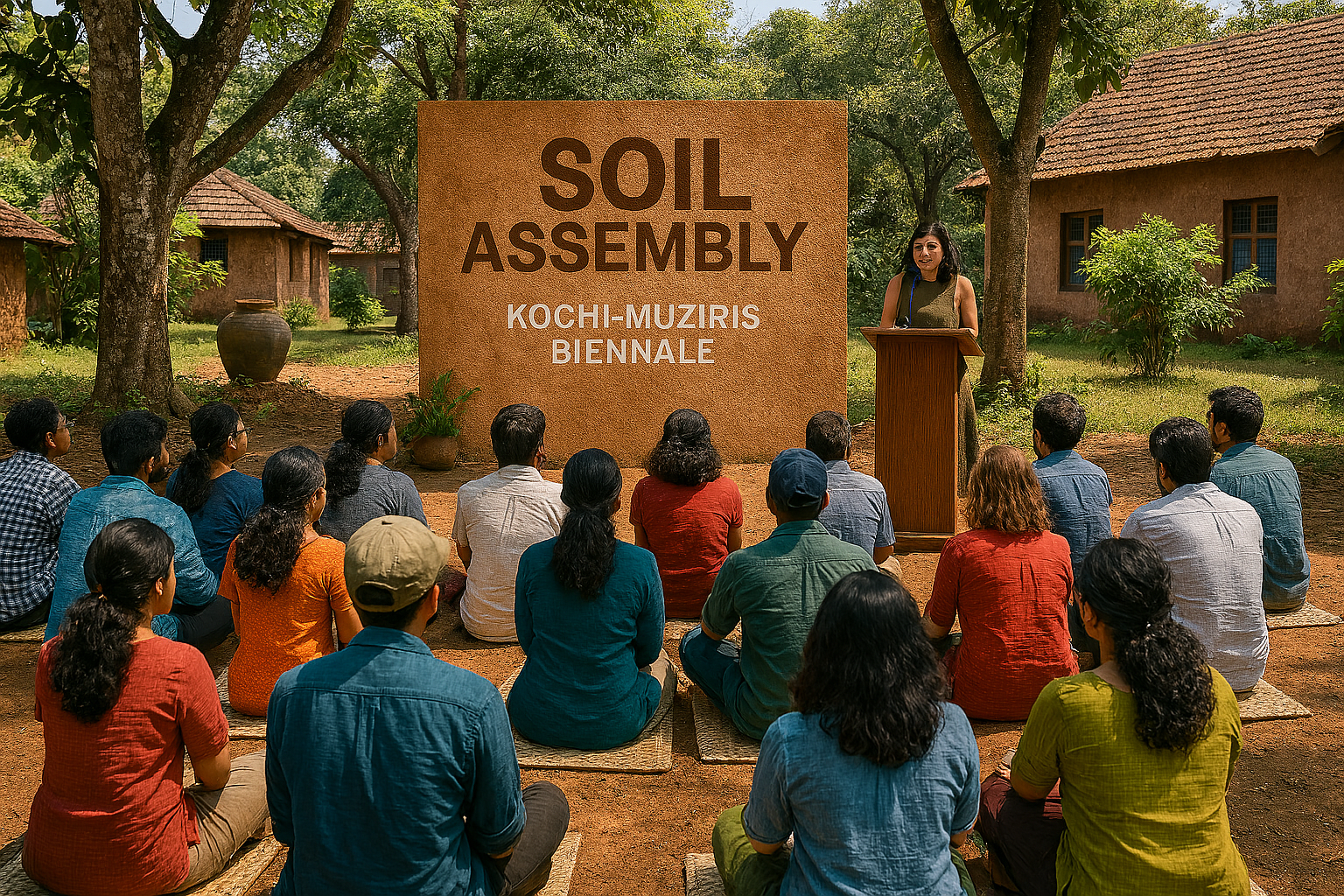
A four-day Soil Assembly conference has commenced at the ongoing Kochi-Muziris Biennale, bringing together artists, researchers, activists, and environmental thinkers from around the world to explore urgent ecological issues and the creative responses addressing them.
Held as a key segment of the international contemporary art festival — which runs through March 31, 2026 — the Soil Assembly aims to investigate the intersections of art, ecology, and community dialogue, particularly focusing on global soil degradation and its implications for environmental sustainability.
In his opening address, Biennale co-founder Bose Krishnamachari emphasised the essential role of political and ecological awareness in art, noting that socially engaged artistic practices can catalyse public understanding of environmental crises. The gathering features participants from countries including Brazil, China, Japan, Indonesia, Spain, and Italy, reflecting the global dimension of ecological challenges.
The inaugural sessions covered diverse topics such as wetland preservation, mangrove ecosystems, and the microbiological health of soil, through presentations by environmental researchers and curators. The discussions highlighted how soil health underpins agricultural productivity, climate regulation, and community resilience in the face of environmental stressors.
Adding a cultural dimension, the conference featured film screenings and artistic works that interrogate humanity’s evolving relationship with the earth. For instance, discussions about visual narratives on survival struggles in Ecuador offered a poignant look at how ecological instability affects vulnerable communities.
Planned programmes for later days include a Wild Food Walk, led by local environmental activists, to raise awareness about indigenous edible plants and their role in sustainable food systems. Additional events include screenings of films such as Uppuveedukal, which documents the fragile coastal ecosystems of Kerala and the pressures these landscapes face from climate change.
The Soil Assembly’s multidisciplinary approach reflects a broader effort at the Biennale to use art not just for aesthetic reflection but as a medium for public engagement and ecological advocacy. According to organisers, one of the core goals is to foster collaborations that extend beyond artistic circles into environmental education and policy spheres.
Participants and visitors alike have remarked on the event’s ability to translate complex environmental science into accessible dialogue, inviting community members to consider soil as a living system — integral to food security, climate stability, and cultural identity.
As the Biennale continues to attract global attention, the Soil Assembly is seen as a pivotal platform that situates Kochi at the crossroads of creative thought and ecological action.
News as reported