

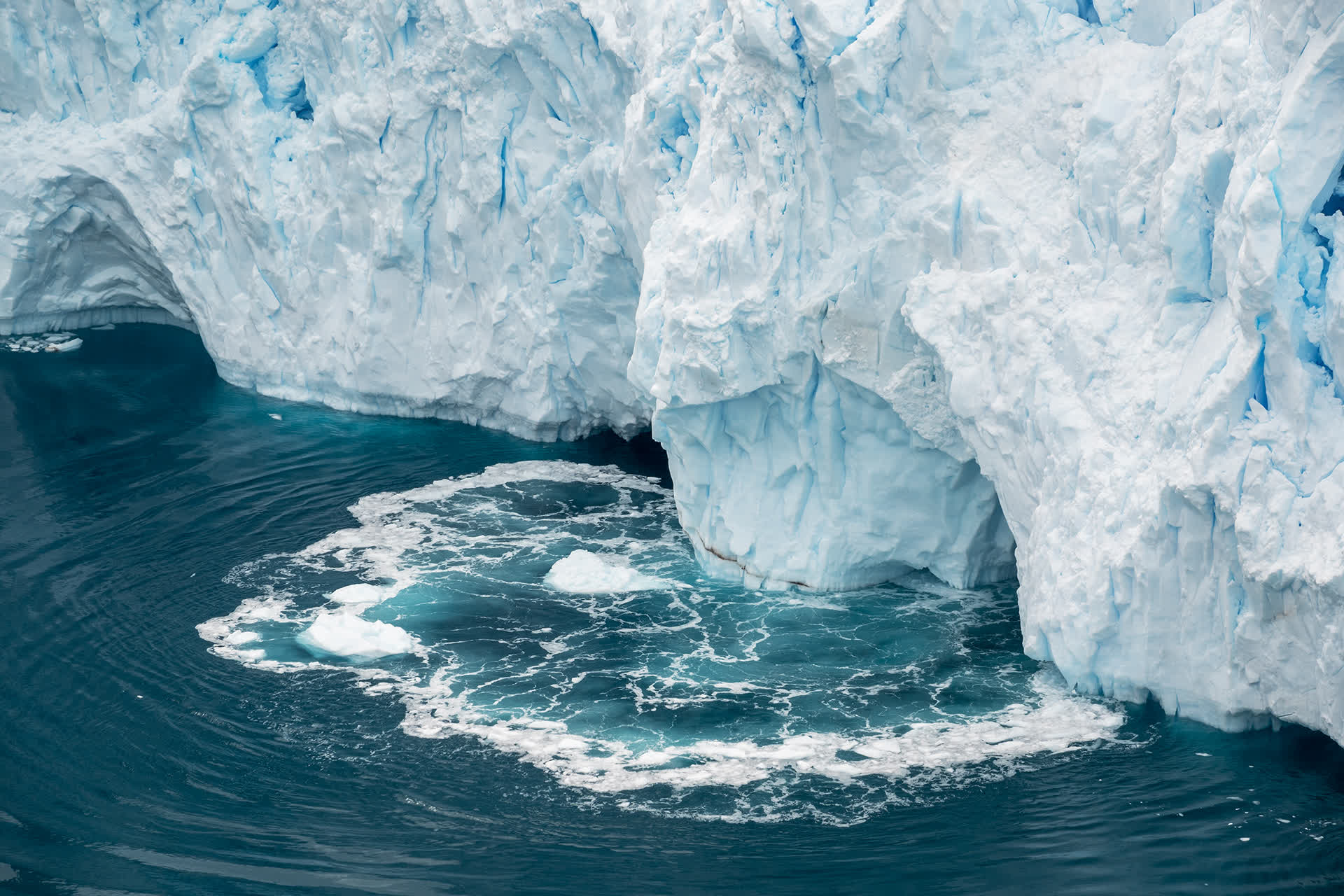
New research has revealed that collapsing Antarctic ice can generate powerful underwater wave surges, sometimes described as “tsunami-like” effects, with significant implications for ocean circulation and ice-sheet stability.
Scientists studying the interaction between ice shelves and the ocean found that when large sections of Antarctic ice break off or rapidly melt, the sudden displacement of massive volumes of cold, dense water can send energetic waves through the surrounding ocean. Unlike surface tsunamis triggered by earthquakes, these underwater waves travel beneath the surface, redistributing heat, salt, and nutrients across wide areas.
Researchers say these processes may play an important role in accelerating ice loss. The underwater surges can erode the base of nearby ice shelves, making them more vulnerable to further collapse. This creates a feedback loop in which ice loss fuels ocean turbulence, which in turn promotes additional melting.
The findings also suggest broader impacts on ocean dynamics. By stirring deep waters and altering local currents, the waves could influence how heat from warmer oceans reaches the Antarctic ice sheet, a key factor in future sea-level rise.
Climate scientists note that as Antarctica continues to warm, large-scale ice collapses may become more frequent. Understanding these hidden underwater processes, they say, is critical for improving climate models and refining projections of sea-level rise and global ocean circulation in a warming world – News as reported
