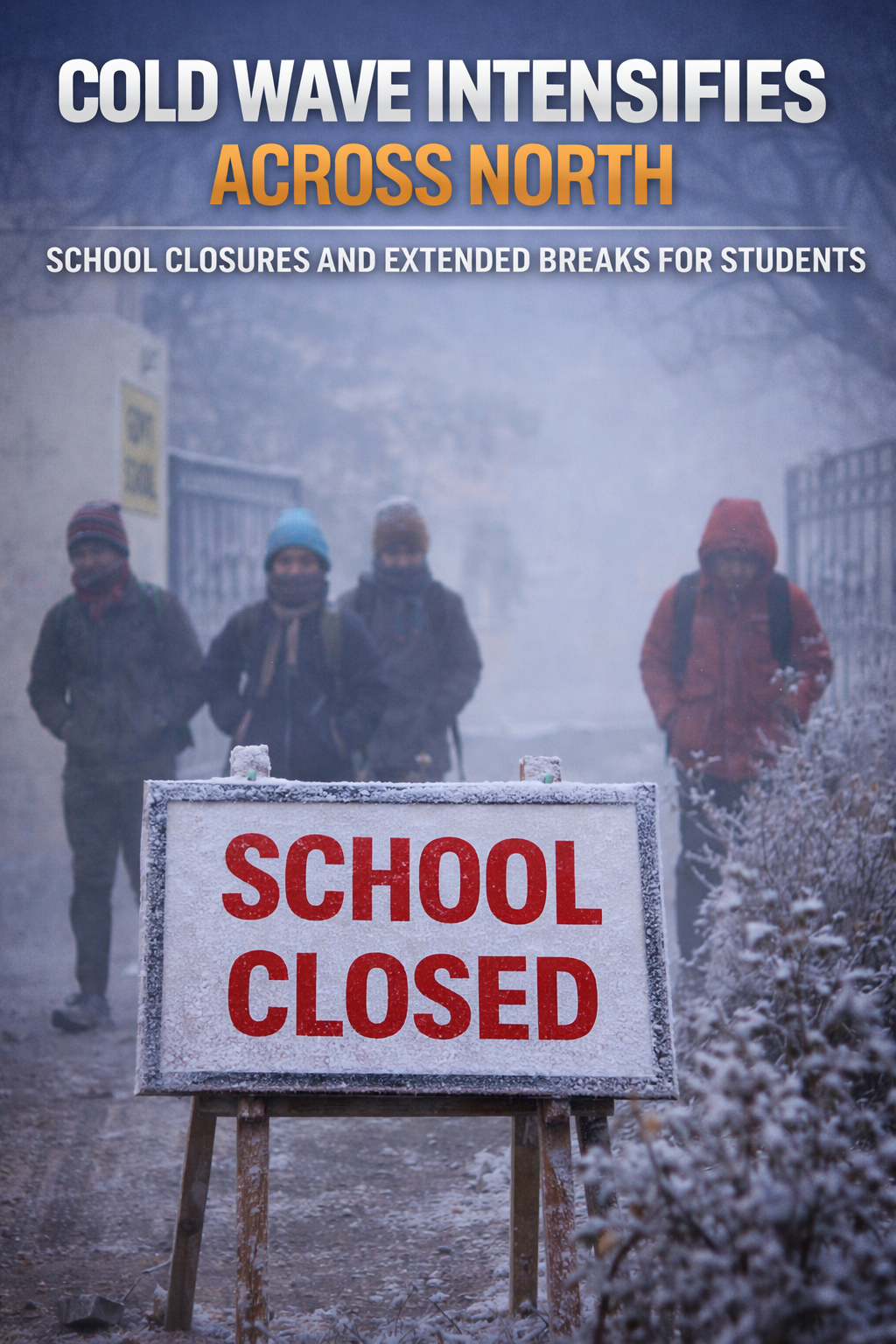
A severe cold wave has intensified across several northern states, prompting authorities to order school closures and extend winter breaks for students in multiple districts. Plunging temperatures, dense fog, and icy winds have significantly disrupted daily routines, affecting education, transportation, and normal civic life across the region.
States including Delhi, Punjab, Haryana, Uttar Pradesh, Rajasthan, and parts of Himachal Pradesh are experiencing unusually low minimum temperatures, with early morning fog reducing visibility and increasing health risks, especially for children and the elderly. In response, local administrations have announced the temporary closure of schools or shifted classes to online mode where possible, aiming to safeguard students from prolonged exposure to extreme cold conditions.
Parents have welcomed the precautionary measures, though many have expressed concerns about learning disruptions, particularly for students preparing for board examinations. Teachers and school administrators are working to adjust academic schedules, revise exam timetables if needed, and ensure syllabus continuity through alternative arrangements.
Beyond education, the cold wave has impacted daily routines, with delays reported in road, rail, and air travel due to foggy conditions. Homeless populations and outdoor workers are among the most affected, prompting state governments and civic bodies to set up night shelters, distribute blankets, and run community kitchens to provide relief.
Meteorological authorities have indicated that cold conditions may persist in the coming days, advising residents to take precautions and avoid unnecessary outdoor exposure during early morning and late-night hours. As winter tightens its grip, administrations remain on alert, balancing public safety with efforts to minimize disruptions to education and everyday life across northern India news as reported.