

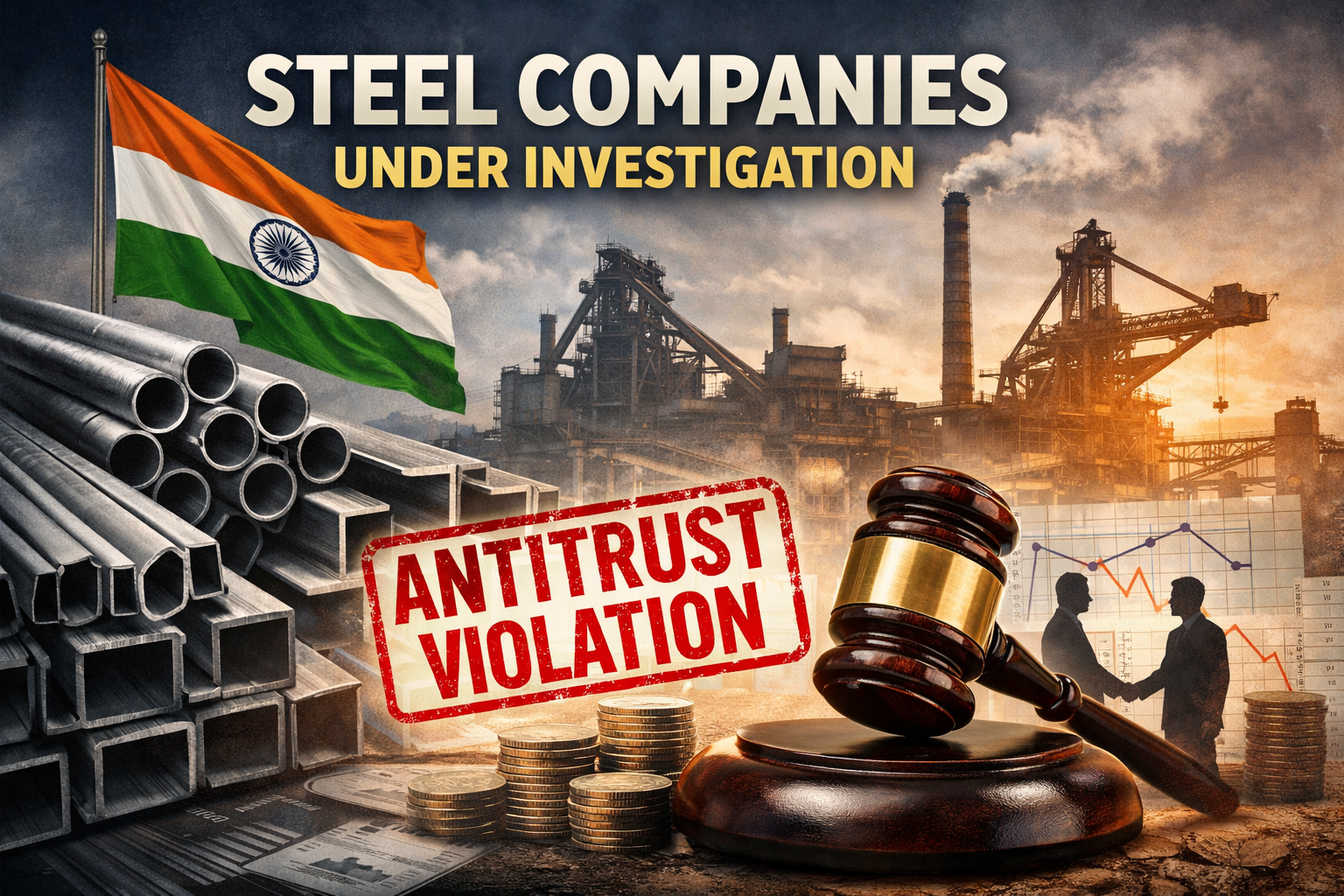
India’s competition watchdog has found that several major steel companies violated antitrust laws, triggering a series of regulatory actions aimed at restoring fair competition in the market. Following a detailed investigation, the authority concluded that certain leading players engaged in anti-competitive practices, including price coordination, market allocation, and information sharing that restricted free and fair trade within the domestic steel sector.
According to the findings, these practices distorted pricing mechanisms and limited choices for consumers, downstream industries, and infrastructure projects that depend heavily on steel supplies. The watchdog noted that coordinated behavior among dominant firms weakened market competitiveness and created barriers for smaller producers, ultimately affecting efficiency and innovation in the sector.
In response, the regulator has imposed financial penalties proportionate to the severity and duration of the violations. It has also issued directives requiring the companies to cease anti-competitive conduct immediately and implement internal compliance programs to prevent future breaches. These measures include regular audits, employee training on competition law, and transparent reporting mechanisms.
Industry experts believe the decision sends a strong signal to corporate India about the consequences of cartelization and collusive practices. The steel industry, which plays a critical role in infrastructure development, manufacturing, and economic growth, is expected to undergo closer regulatory scrutiny in the coming months.
The watchdog emphasized that its actions are intended not to disrupt the industry but to promote healthy competition, protect consumer interests, and ensure long-term market stability. The ruling is likely to influence pricing behavior and corporate governance standards across the sector, reinforcing India’s broader commitment to fair market practices and robust competition law enforcement.
Title: Supreme Court Denies Bail to Two Long-Detained Muslim Activists After Years Without Trial, Sparking Legal and Civil Rights Debate
Description (≈250 words):
The Supreme Court has denied bail to two Muslim activists who have remained in custody for several years without the commencement or completion of a full trial, a decision that has drawn significant attention from legal experts and civil rights groups across the country. The activists were arrested under stringent security-related laws, with authorities alleging their involvement in activities considered a threat to national security. Despite the prolonged detention, the trial process has moved slowly, with repeated delays cited by the defense.
In its order, the apex court acknowledged the long period of incarceration but held that the seriousness of the charges and the applicable legal provisions did not justify granting bail at this stage. The court emphasized that bail decisions in such cases must balance individual liberty with broader concerns of public order and national security. It also noted that the lower courts should make efforts to expedite the trial process.
The ruling has reignited debate around preventive detention, the use of special laws, and the constitutional right to a speedy trial. Civil rights organizations argue that extended imprisonment without conviction undermines fundamental freedoms and disproportionately affects minority communities. They have called for judicial and legislative reforms to ensure that undertrial prisoners are not subjected to indefinite detention.
Legal scholars, meanwhile, point out that while courts often exercise caution in cases involving serious charges, prolonged delays raise critical questions about due process and fairness. The case is expected to remain under close scrutiny, as it highlights the ongoing tension between state security measures and the protection of individual rights guaranteed under the Constitution news as reported.


- upgraderz.aws@gmail.com
- upgraderz.aws@gmail.com
- upgraderz.aws@gmail.com
- upgraderz.aws@gmail.com