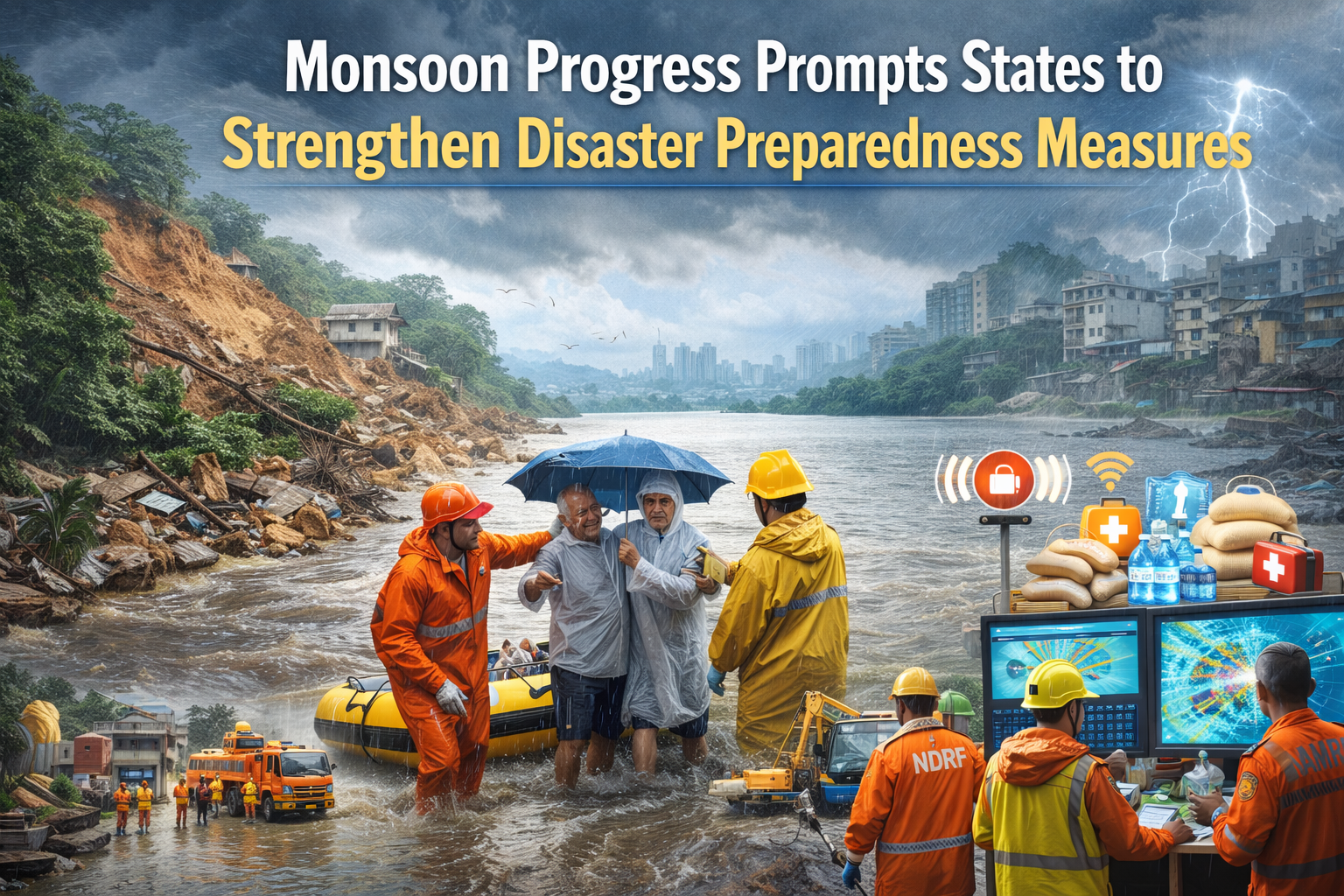
With the southwest monsoon advancing steadily across several regions, state governments have intensified efforts to strengthen disaster preparedness and response mechanisms. Authorities are closely monitoring rainfall patterns, river water levels, and weather forecasts to minimize risks associated with floods, landslides, and other monsoon-related hazards. The focus is on proactive planning to protect lives, infrastructure, and livelihoods, especially in vulnerable and low-lying areas.
State disaster management authorities have directed district administrations to review emergency action plans and ensure the readiness of control rooms, early warning systems, and rapid response teams. Steps are being taken to clear drainage channels, reinforce embankments, and inspect dams and reservoirs to prevent overflow-related incidents. Coastal states are also alerting fishing communities about rough sea conditions and enforcing safety advisories to reduce maritime risks.
Local bodies have been instructed to identify relief shelters, stock essential supplies such as food, drinking water, medicines, and ensure the availability of rescue equipment. Special attention is being given to landslide-prone hilly regions, where slope stability measures and evacuation drills are being strengthened. Power utilities, health departments, and public works agencies are coordinating to ensure uninterrupted essential services during extreme weather events.
The Centre has assured full support to states through technical guidance, real-time data sharing, and the deployment of national disaster response forces wherever required. Officials emphasized that timely preparedness and coordination between agencies are crucial to reducing the impact of monsoon-related disasters. As rainfall activity increases, states remain on high alert, aiming to ensure swift response, effective relief operations, and rapid restoration of normalcy in affected areas news as reported.