

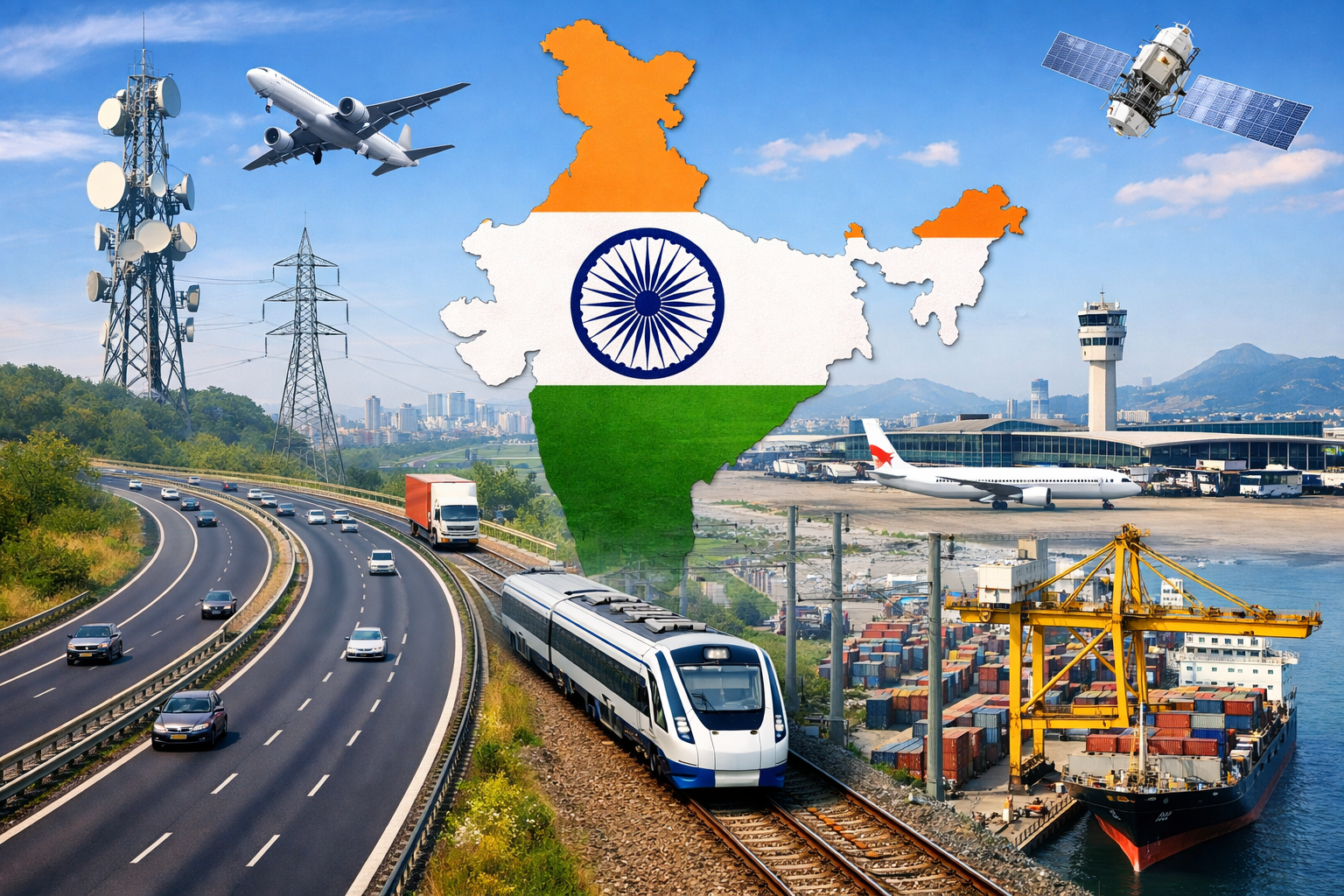
The Central Government has accelerated the implementation of key infrastructure projects across the country with the aim of strengthening regional connectivity and supporting balanced economic growth. Major investments are being directed toward highways, railways, airports, ports, and digital infrastructure to improve access between urban hubs and rural or remote regions. These initiatives are designed to reduce travel time, lower logistics costs, and enhance the movement of people, goods, and services across states.
Several national highway expansion projects and expressway corridors are progressing at a faster pace, linking industrial zones, agricultural markets, and tourist destinations. At the same time, railway modernization—including new lines, electrification, and station redevelopment—is improving passenger convenience and freight efficiency. Regional airports under connectivity schemes are also witnessing upgrades, making air travel more accessible to smaller cities and underserved areas.
The government has emphasized timely execution through better project monitoring, public-private partnerships, and streamlined approval processes. Digital tools are being used to track progress and resolve bottlenecks, ensuring transparency and accountability. These infrastructure upgrades are expected to generate large-scale employment during construction while creating long-term opportunities in trade, tourism, and local enterprises.
By enhancing connectivity, the Centre aims to integrate regional economies with national and global markets, reduce regional disparities, and improve overall quality of life. Experts believe that sustained infrastructure development will play a critical role in boosting investor confidence, improving supply chains, and supporting India’s long-term growth ambitions.
New Digital Services Rolled Out to Improve Public Service Delivery Nationwide
The Central Government has rolled out a new wave of digital services aimed at improving the efficiency, transparency, and accessibility of public service delivery across the country. These initiatives are part of a broader push toward e-governance, leveraging technology to ensure that citizens can access essential services quickly and conveniently, regardless of their location.
The newly introduced digital platforms cover a wide range of public services, including welfare scheme applications, identity verification, healthcare registrations, education-related services, and grievance redressal systems. By integrating multiple departments into unified online portals and mobile applications, the government aims to reduce paperwork, eliminate duplication, and minimize delays caused by manual processes. Citizens can now submit applications, track service status, and receive updates in real time, improving overall user experience.
Special emphasis has been placed on reaching rural and underserved areas through mobile-friendly platforms, multilingual interfaces, and common service centers. These measures are expected to bridge the digital divide and ensure inclusivity, enabling wider participation in government programs. Enhanced data security protocols and authentication systems have also been implemented to protect user information and maintain trust in digital governance.
Officials state that the expansion of digital services will not only improve administrative efficiency but also reduce costs and opportunities for corruption. Experts believe that sustained investment in digital infrastructure and capacity building will strengthen public institutions and empower citizens. The nationwide rollout marks a significant step toward building a more responsive, transparent, and citizen-centric governance framework.

- upgraderz.aws@gmail.com
- upgraderz.aws@gmail.com
- upgraderz.aws@gmail.com
- upgraderz.aws@gmail.com