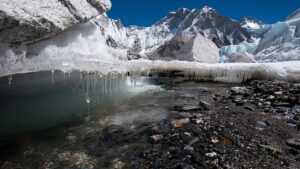
Rising global temperatures are causing glaciers across the world’s major mountain ranges to melt at unprecedented rates, according to recent scientific studies. From the Himalayas and the Alps to the Andes and the Rocky Mountains, glaciers are shrinking rapidly as warmer air temperatures reduce snowfall and increase ice loss during summer months.
Researchers report that mountain regions are warming faster than the global average, making glaciers especially vulnerable. In the Himalayas and Hindu Kush region, accelerated melting threatens water supplies for hundreds of millions of people who rely on glacier-fed rivers for drinking water, agriculture, and hydropower. In Europe, Alpine glaciers have already lost a large share of their ice, with many smaller glaciers projected to disappear entirely within decades.
The consequences extend beyond ice loss. Rapid melting increases the risk of glacial lake outburst floods, landslides, and damage to infrastructure in mountain communities. Over the long term, shrinking glaciers reduce the steady flow of water during dry seasons, creating challenges for food production and energy generation. Meltwater from mountain glaciers also contributes to global sea-level rise.
Scientists warn that limiting global warming could significantly slow glacier loss, while continued high emissions may lead to the disappearance of many mountain glaciers by the end of the century.