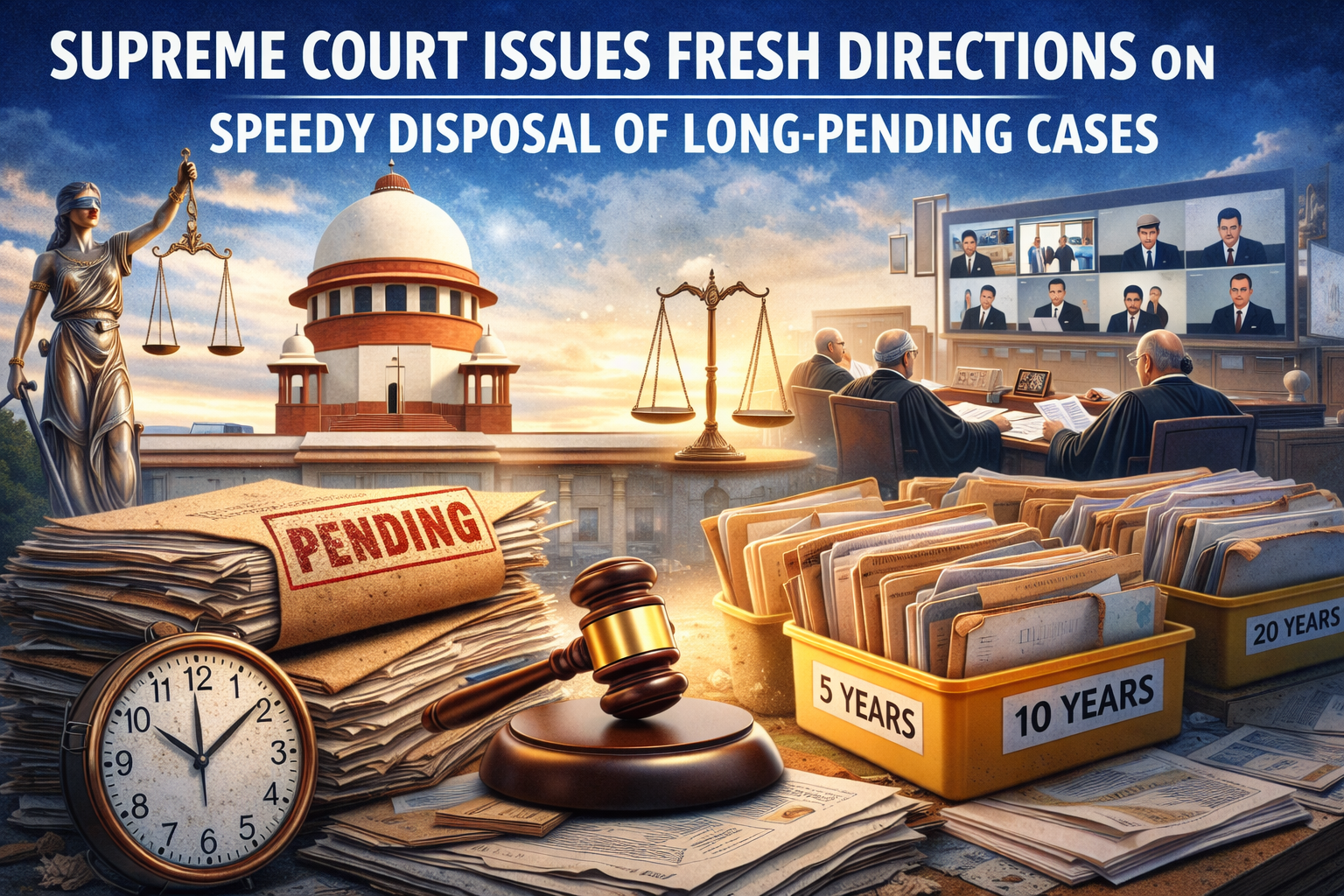
The Supreme Court has issued fresh directions aimed at accelerating the disposal of long-pending cases across courts in the country, underlining the urgent need to reduce judicial backlog and improve access to timely justice. The directions come amid growing concerns over delays that have affected litigants for years, particularly in civil disputes, criminal trials, and service-related matters.
In its observations, the apex court emphasized that justice delayed undermines public confidence in the legal system and places an emotional and financial burden on citizens. To address this, the court has called for stricter case management practices, including time-bound hearings, limited adjournments, and effective monitoring of old cases. Special focus has been placed on matters pending for over five, ten, and twenty years, with instructions to prioritize their resolution.
The Supreme Court has also directed High Courts to constitute special benches or dedicated drives to identify and clear long-pending cases. Greater use of technology, such as virtual hearings, digital filing systems, and automated case tracking, has been encouraged to streamline judicial processes. Lower courts have been advised to adhere strictly to procedural timelines and discourage unnecessary delays caused by repeated requests for adjournments.