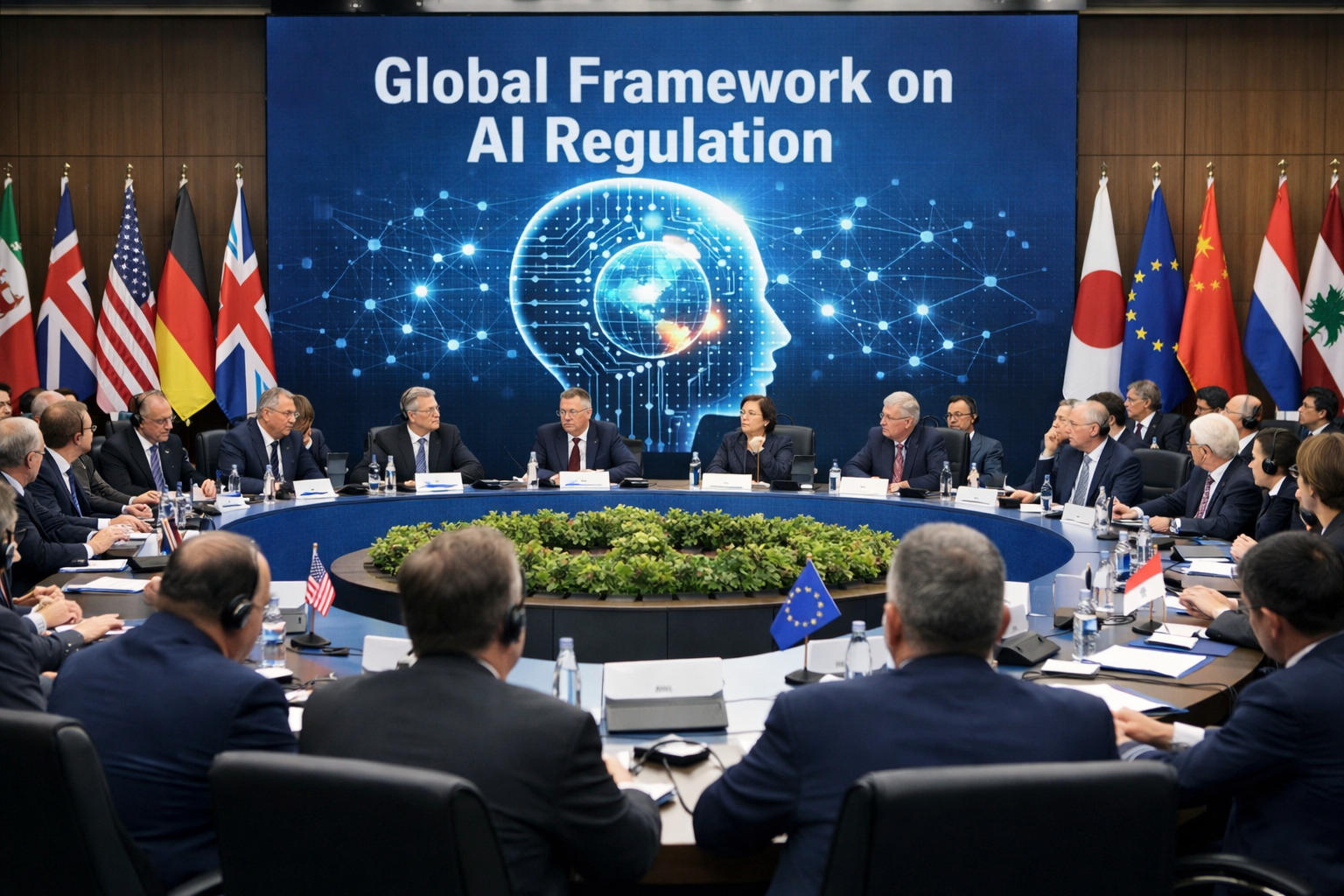
Global leaders and international institutions are advancing efforts to establish a coordinated framework for regulating artificial intelligence (AI) amid concerns over safety, ethics, human rights and cross-border impacts of rapidly evolving technologies. In a landmark step, more than 50 countries, including the United States, the United Kingdom, and European Union member states, signed the Framework Convention on Artificial Intelligence and Human Rights, Democracy, and the Rule of Law in September 2024 — a treaty designed to ensure AI systems respect fundamental rights and democratic values.
The treaty sets out core principles such as transparency, accountability, and non-discrimination while requiring risk and impact assessments to mitigate harms from AI deployment around the world.
At the 2025 AI Action Summit in Paris, leaders from dozens of nations endorsed a joint declaration that urges international cooperation to promote inclusive, ethical, safe and sustainable AI development, highlighting the need to bridge regulatory gaps and avoid fragmented national rules.
Separately, the United Nations General Assembly has established universal governance bodies — like the Global Dialogue on AI Governance and the Independent International Scientific Panel on AI — to expand participation beyond developed economies and foster global cooperation in AI oversight.
While full implementation and enforcement of global AI rules will take years, these multilateral steps mark the most significant move yet toward harmonised cross-border AI regulation that balances innovation with safety and human rights protections.