

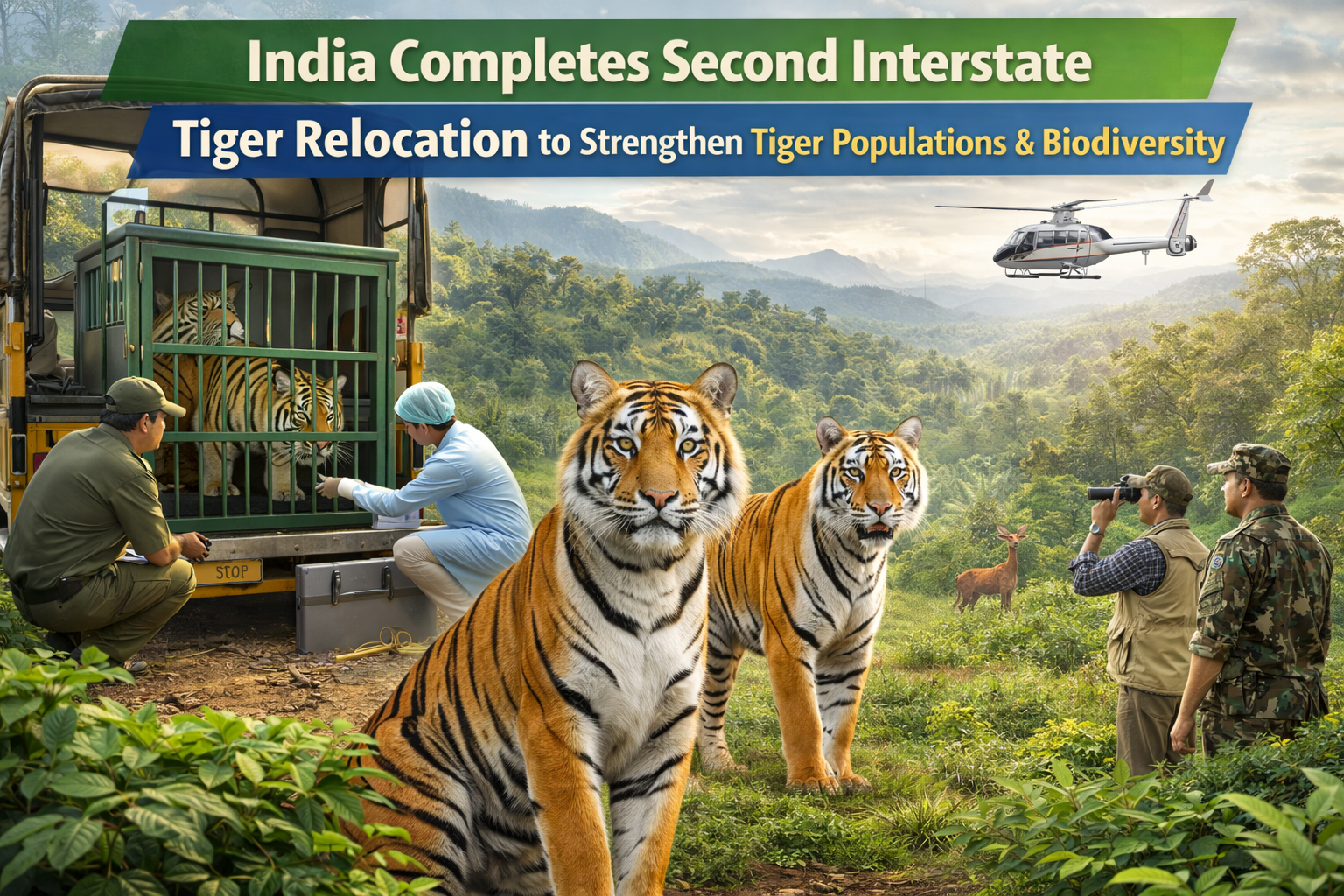
India has successfully completed its second interstate tiger relocation, marking a significant milestone in the country’s ongoing efforts to strengthen tiger populations and conserve biodiversity across critical landscapes. The carefully planned translocation involved moving tigers from a reserve with a healthy population to another habitat where tiger numbers were low but ecological conditions were suitable for revival.
The initiative is part of India’s broader wildlife conservation strategy aimed at reducing pressure on densely populated reserves, improving genetic diversity, and restoring balanced ecosystems. Wildlife experts, forest officials, and veterinarians worked together to ensure the safe capture, health assessment, transport, and release of the big cats, following strict scientific and ethical protocols.
Officials said the relocation will help establish a stable breeding population in the receiving reserve, enhancing prey-predator balance and strengthening the overall forest ecosystem. Tigers play a vital role as apex predators, and their presence indicates a healthy habitat that supports a wide range of plant and animal species.
The project also reflects strong coordination between states, highlighting cooperative federalism in wildlife conservation. Continuous monitoring through radio collars and field surveillance will track the tigers’ adaptation, movement, and survival, ensuring timely intervention if required.
Conservationists have welcomed the move, noting that interstate relocation is a crucial tool in securing the long-term future of India’s tiger population. With nearly three-quarters of the world’s wild tigers, India’s success in such initiatives reinforces its global leadership in big cat conservation while promoting biodiversity protection, habitat connectivity, and sustainable coexistence between humans and wildlife.


- upgraderz.aws@gmail.com
- upgraderz.aws@gmail.com
- upgraderz.aws@gmail.com
- upgraderz.aws@gmail.com