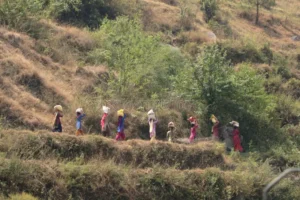
In the hill villages of Uttarakhand, local communities are reviving centuries-old forest protection traditions to conserve biodiversity and restore degraded landscapes. Drawing on faith-based beliefs and cultural practices, villagers are taking collective responsibility to safeguard nearby forests from deforestation and overexploitation.
Sacred groves, locally revered as abodes of deities, are once again being protected through community-led rules that prohibit tree felling, hunting, and grazing. Elders and village councils play a key role in enforcing these norms, blending spiritual values with environmental stewardship. Residents believe that harming these forests invites misfortune, a belief that has proven effective in ensuring compliance without the need for formal policing.
As a result, natural regeneration has increased, with native trees, medicinal plants, birds, and wildlife gradually returning to protected areas. These revived forests are also helping improve water availability, reduce soil erosion, and strengthen resilience against climate-related challenges such as landslides.
Environmentalists say such community-driven conservation models offer valuable lessons for sustainable development. By combining traditional knowledge with modern conservation goals, villagers are demonstrating that cultural heritage can be a powerful tool in protecting ecosystems. Authorities are now exploring ways to support and replicate these practices in other regions facing ecological stress.