

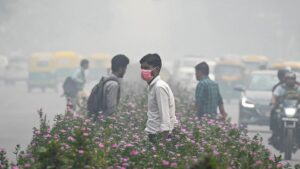
A thick blanket of toxic smog engulfed New Delhi on Tuesday, pushing air quality to hazardous levels and triggering emergency public health measures across the capital. Visibility dropped sharply in several areas, disrupting flight schedules, delaying trains, and slowing road traffic as residents struggled to navigate the polluted conditions.
Authorities reported a sharp rise in air pollution levels, driven by a combination of vehicular emissions, industrial pollution, construction dust, and seasonal factors such as stubble burning in neighboring states. Hospitals noted an increase in patients complaining of breathing difficulties, eye irritation, and other respiratory problems, particularly among children, the elderly, and those with pre-existing conditions.
In response, the government implemented emergency measures, including restrictions on construction activities, limits on the use of diesel generators, and advisories urging people to stay indoors. Schools were advised to reduce outdoor activities, while residents were encouraged to wear masks and use air purifiers where possible.
Environmental experts warned that prolonged exposure to such hazardous air could have serious long-term health consequences. They also emphasized the need for sustained policy action, improved regional coordination, and long-term solutions to address Delhi’s recurring air pollution crisis, which intensifies each winter and continues to pose a major public health challenge.
