

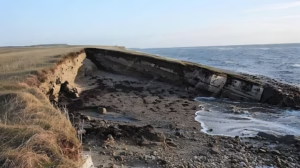
Coastal erosion is intensifying across multiple countries, posing a serious threat to livelihoods, ecosystems, and critical infrastructure. Rising sea levels, stronger storm surges, and changing wave patterns are accelerating the loss of coastlines, forcing communities to confront growing environmental and economic risks. In many low-lying and island regions, homes, roads, ports, and tourism facilities are increasingly vulnerable to damage or destruction.
Fishing communities are among the hardest hit, as shrinking shorelines and damaged coastal ecosystems reduce fish stocks and disrupt traditional livelihoods. Farmland near coastal areas is also being affected by saltwater intrusion, leading to declining crop yields and soil degradation. Environmental experts warn that mangroves, coral reefs, and sand dunes—natural barriers that protect coastlines—are being eroded or destroyed, further increasing exposure to extreme weather events.
Governments and local authorities are responding with a mix of short-term and long-term measures, including shoreline reinforcement, beach nourishment, and the restoration of natural buffers such as mangroves and wetlands. However, experts caution that hard engineering solutions alone may not be sufficient. Integrated coastal management, climate-resilient planning, and community participation are increasingly seen as essential to address the root causes of erosion.
As coastal erosion accelerates, the challenge of balancing development, environmental protection, and human safety is becoming more urgent, highlighting the need for coordinated global and regional action.
