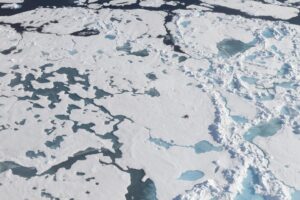
Researchers have discovered significant microplastic contamination in freshly fallen snow across remote regions of the Arctic, offering striking evidence that plastic pollution has infiltrated even the planet’s most isolated ecosystems. The findings, based on snow and ice samples collected from areas far removed from human activity, reveal that tiny plastic particles are being transported thousands of kilometers through the atmosphere before settling in polar environments.
Scientists report that microplastics detected in the Arctic include fragments of packaging materials, synthetic fibers from clothing, and particles from vehicle tires. These particles are believed to travel via wind currents, storms, and global weather patterns, demonstrating how far-reaching plastic pollution has become.
The discovery raises major environmental concerns. Microplastics can absorb toxic chemicals, disrupt biological processes, and potentially enter the food chain through marine animals and birds that ingest contaminated snowmelt. Researchers warn that the Arctic’s fragile ecosystems may face long-term impacts, especially as melting ice could release stored microplastics back into global waters.
Environmental experts emphasize the urgent need for stronger international action to reduce plastic production, improve waste management, and develop biodegradable alternatives. The study reinforces that plastic pollution is not just a local problem—it is a global crisis reaching every corner of the Earth.