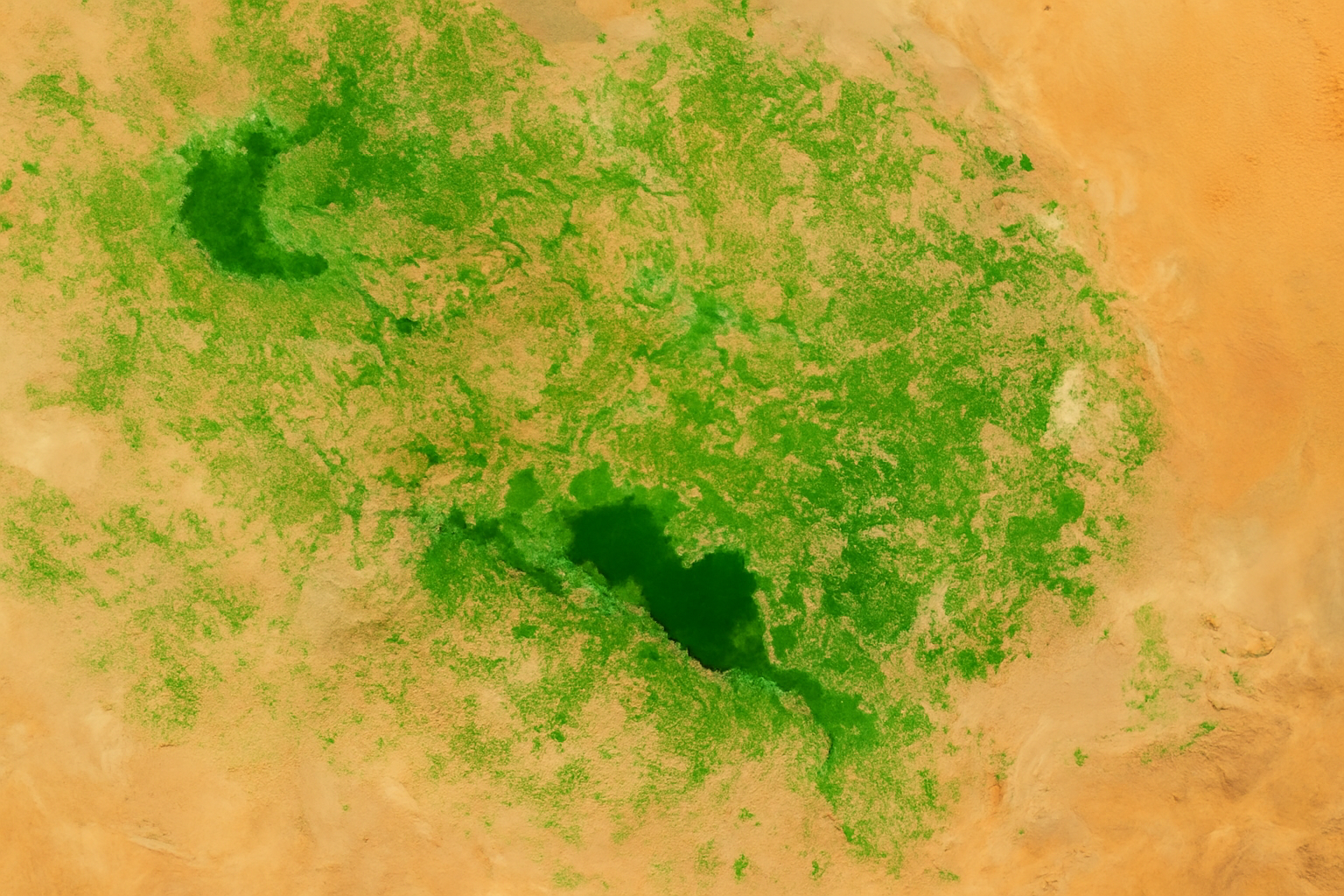
Unusually heavy rainfall across north-western Africa has transformed parts of the Sahara Desert — long regarded as barren and bone-dry — into unexpected pockets of green, raising hopes among biodiversity researchers that a rare “desert bloom” may be underway. Recent storms in early September drenched regions in Morocco, Algeria, Tunisia and Libya, delivering in some places more than a year’s worth of rain in a few days.
Satellite imagery from NASA’s Earth Observatory, captured on September 10, 2024, shows the emergence of vegetation and ephemeral lakes in areas that are typically scorched sand and gravel. Scientists note that shrubs, grasses — and possibly even wildflowers — are sprouting in low-lying areas such as dry riverbeds and former lakebeds now filled by floodwaters.
Experts comment that such unexpected greening stems from seeds lying dormant for years, waiting for rare enough moisture; when rainfall surpasses certain thresholds and moisture persists, even arid deserts like the Sahara can spring to life. They caution though: the greening is likely to be highly temporary. As the rains recede and desert heat returns, much of the vegetation may wither — but this brief bloom may provide a valuable, if fleeting, lifeline for flora and fauna, and a rare chance to study desert-ecosystem resilience.