

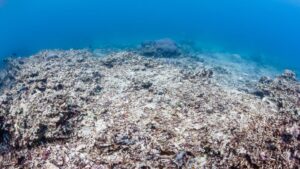
Recent studies indicate that ocean acidification has surpassed critical planetary thresholds, pushing coastal and open seas beyond the “safe operating space” for marine ecosystems. Scientists warn that this breach of the planetary boundary for ocean chemistry represents a serious threat to marine biodiversity, fisheries, and the ocean’s capacity to regulate Earth’s climate.
Ocean acidification occurs when oceans absorb excess atmospheric CO₂, lowering the pH and altering carbonate chemistry essential for shell-forming organisms such as corals, mollusks, and plankton. These foundational species support entire marine food webs and play a critical role in carbon cycling and climate regulation. Crossing planetary boundaries means the resilience of these ecosystems is severely compromised, with cascading effects on marine biodiversity and coastal communities that rely on seafood for nutrition and livelihoods.
Researchers emphasize that current rates of acidification are unprecedented in human history and highlight the urgent need for global carbon emission reductions. They also call for enhanced monitoring, adaptive fisheries management, and ecosystem-based approaches to bolster the resilience of vulnerable marine species.
Failing to address ocean acidification risks long-term disruption of ocean ecosystems, threatening food security, economic stability, and the climate-mitigating functions of the world’s oceans. Experts stress that immediate international collaboration and decisive climate action are essential to safeguard the health of marine environments and human societies.
