

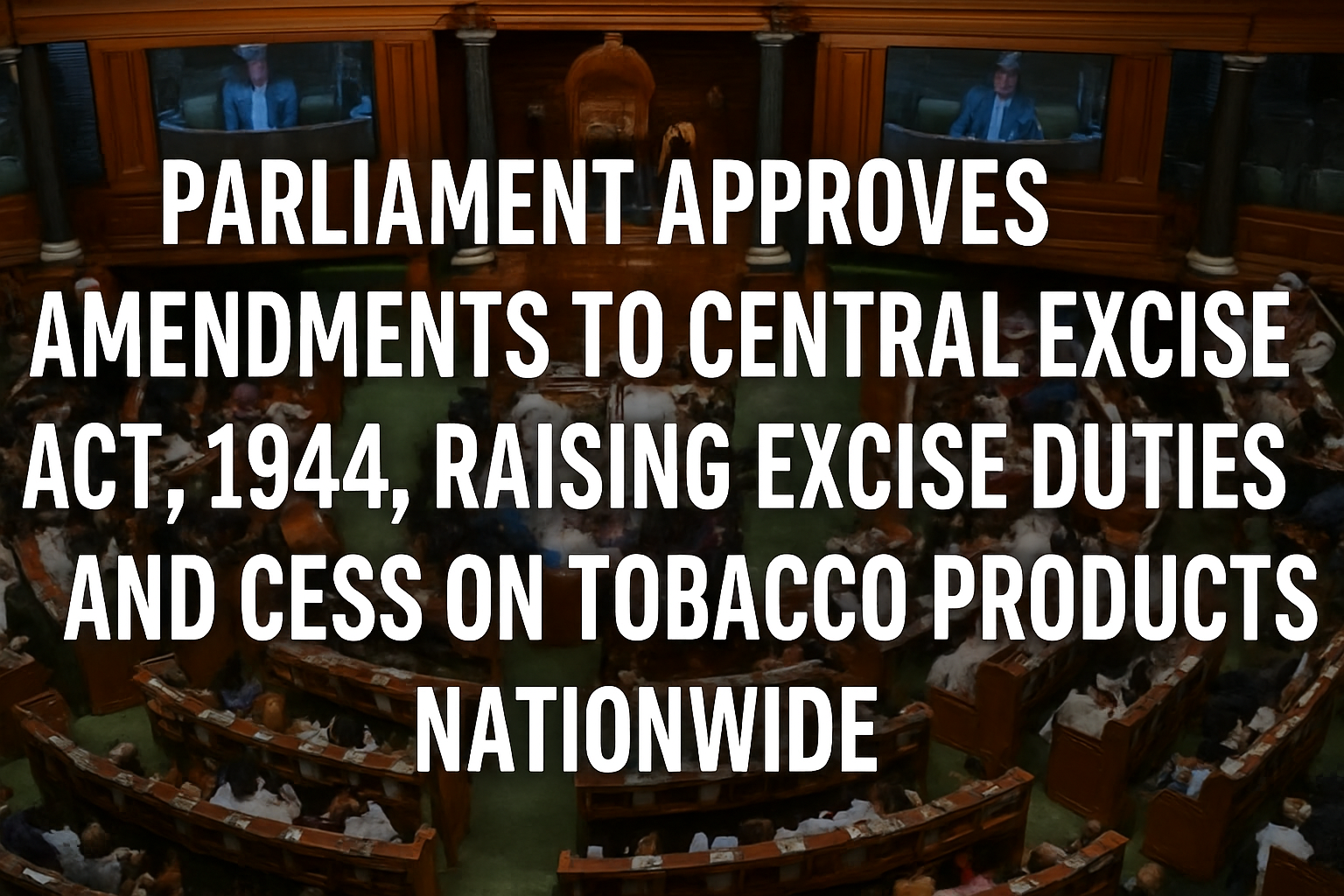
The Parliament has passed the amended Central Excise Act, 1944, introducing a significant increase in excise duties and cess on tobacco products across India. The move is aimed at curbing tobacco consumption, boosting public health initiatives, and generating additional revenue for the government. The revised excise structure affects cigarettes, bidis, chewing tobacco, and other tobacco-derived products, marking one of the most substantial fiscal steps taken in recent years to regulate the tobacco sector.
According to officials, the increased duties are part of a broader strategy to discourage tobacco use, especially among young consumers. Public health experts have welcomed the amendment, noting that higher prices often lead to reduced consumption and can positively impact long-term health outcomes. The government has also stated that the additional revenue generated will be allocated to national health programs, anti-tobacco campaigns, and cancer treatment initiatives.
The tobacco industry, however, has expressed concerns about the potential impact on farmers, retailers, and small manufacturers who rely on tobacco-related income. Industry representatives argue that steep increases in duties may fuel the growth of illegal and unregulated tobacco products in the market.
Despite industry concerns, policymakers maintain that the amendment strikes a necessary balance between public health and economic considerations. Enforcement agencies have been instructed to strengthen monitoring mechanisms to prevent tax evasion and ensure compliance with the new rates.
With this amendment, India reinforces its commitment to reducing tobacco consumption and aligning its regulations with global health standards, marking a significant milestone in national tobacco control efforts.


- upgraderz.aws@gmail.com
- upgraderz.aws@gmail.com
- upgraderz.aws@gmail.com
- upgraderz.aws@gmail.com