

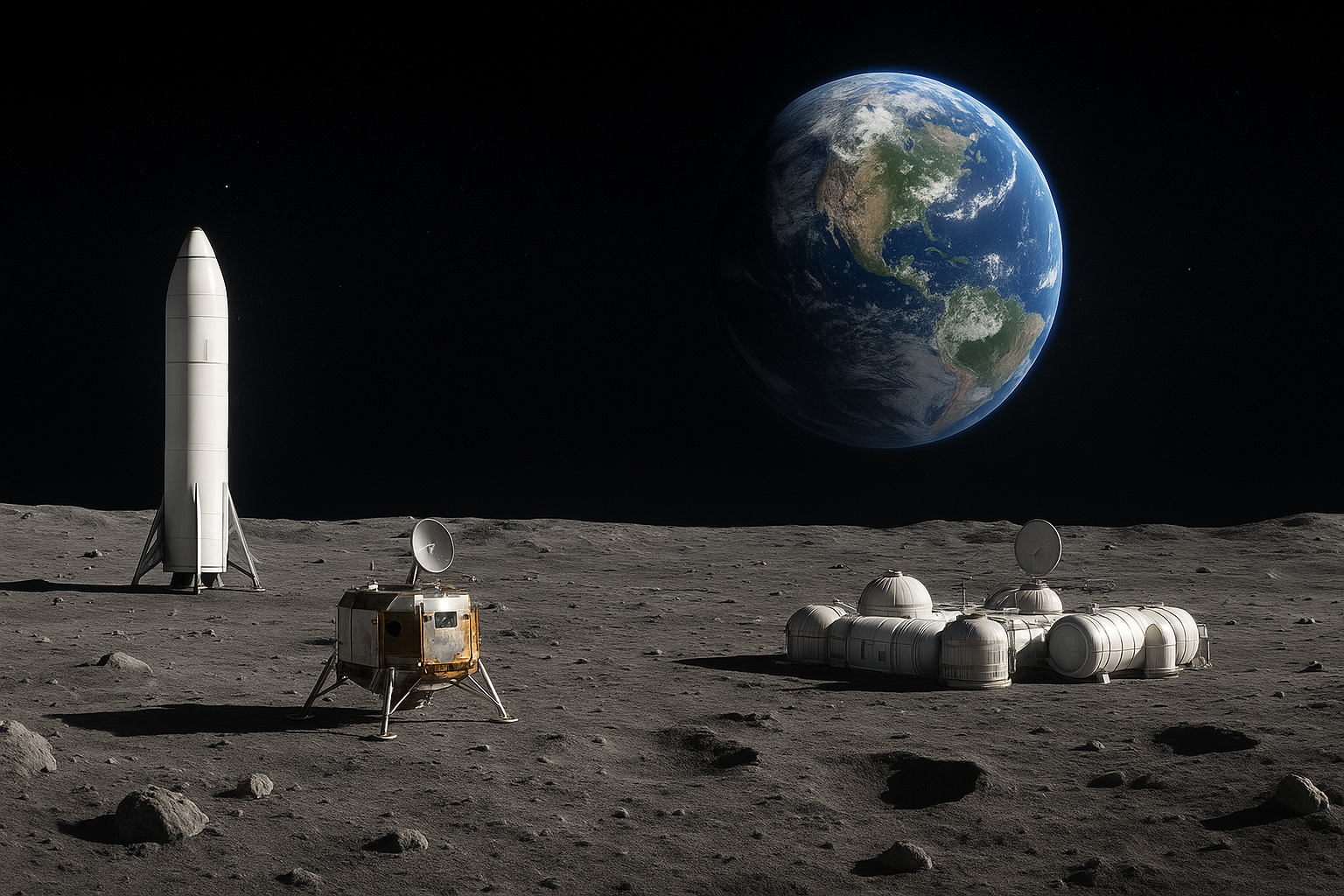
A new era of the international space race is taking shape as major world powers accelerate their return-to-the-Moon ambitions, forming fresh cooperation blocs while long-standing alliances centered on the aging International Space Station (ISS) begin to shift. With the ISS nearing the end of its operational life, countries are rethinking their strategies — and choosing new partners — to secure a foothold in the rapidly evolving lunar economy.
The United States, Europe, Japan and Canada are strengthening coordination under NASA’s Artemis program, which aims to build a sustainable lunar base later this decade. Meanwhile, China and Russia continue advancing their joint International Lunar Research Station (ILRS), inviting additional countries to participate. Emerging space nations, including India and several Middle-Eastern partners, are weighing collaboration options as they seek greater influence in next-generation exploration.
Analysts say this transition marks the most significant restructuring of space alliances in decades. As geopolitical competition intensifies on Earth, lunar ambitions have become a stage for strategic and technological rivalry — but also for unprecedented cooperation opportunities.
With new missions, commercial partnerships and lunar-infrastructure plans accelerating, experts warn that global rules for space governance will become increasingly important to prevent conflict and ensure peaceful exploration.
