


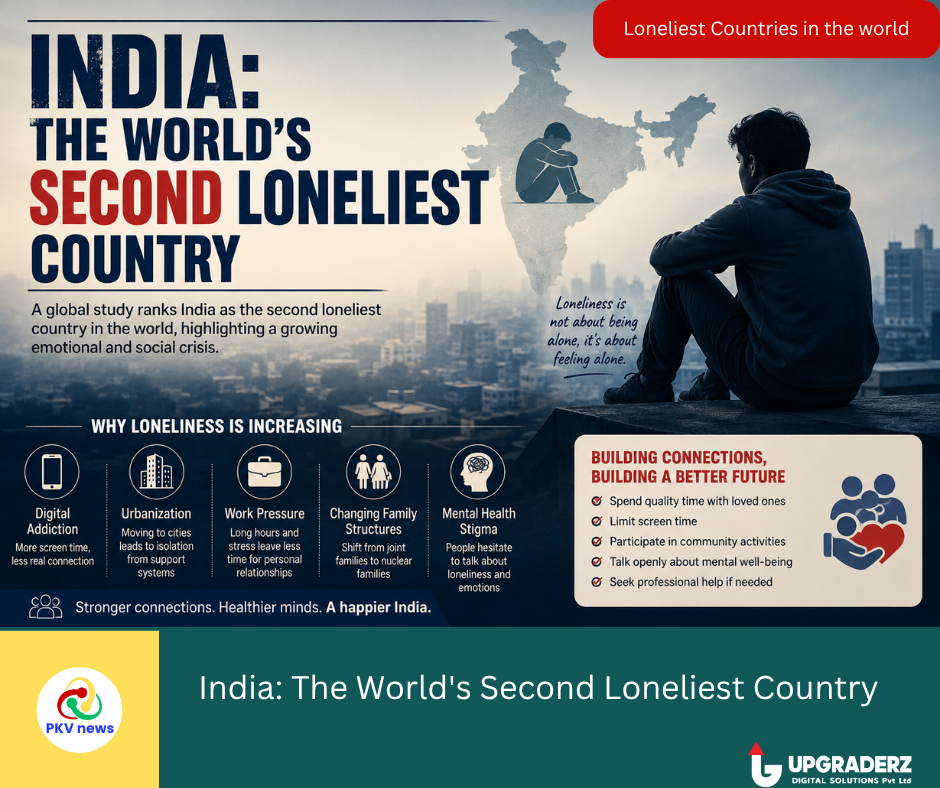
India has been ranked as the world’s second loneliest country in a recent global study, drawing attention to a growing but often overlooked social and mental health issue. Although India is known for its strong family values, vibrant communities, and cultural traditions, the report suggests that millions of people still experience feelings of loneliness and emotional isolation.
Experts explain that loneliness is not simply about living alone. A person can be surrounded by family, friends, or colleagues and still feel disconnected or unsupported. Rapid urbanization, demanding work schedules, migration for education and employment, and the increasing use of smartphones and social media have all contributed to weakening meaningful personal relationships.
Young adults are among the most affected. Despite being constantly connected through digital platforms, many struggle to build genuine friendships and emotional bonds. Social media often creates the illusion of connection while reducing face-to-face interactions. Older adults also face loneliness due to changing family structures, with many traditional joint families giving way to smaller nuclear households.
The effects of loneliness extend beyond emotional well-being. Studies have linked chronic loneliness to anxiety, depression, stress, poor sleep, reduced productivity, and an increased risk of physical health problems, including heart disease. Mental health professionals emphasize that loneliness should be treated as a serious public health concern.
Addressing this issue requires collective effort. Families should encourage open communication and spend quality time together. Schools, workplaces, and local communities can create opportunities for social interaction and emotional support. Individuals can also reduce loneliness by participating in community activities, volunteering, pursuing hobbies, and limiting excessive screen time.
India’s ranking serves as a reminder that emotional connection is just as important as physical presence. Strengthening relationships, promoting mental health awareness, and encouraging meaningful human interaction can help reduce loneliness and build a healthier, happier society for future generations.