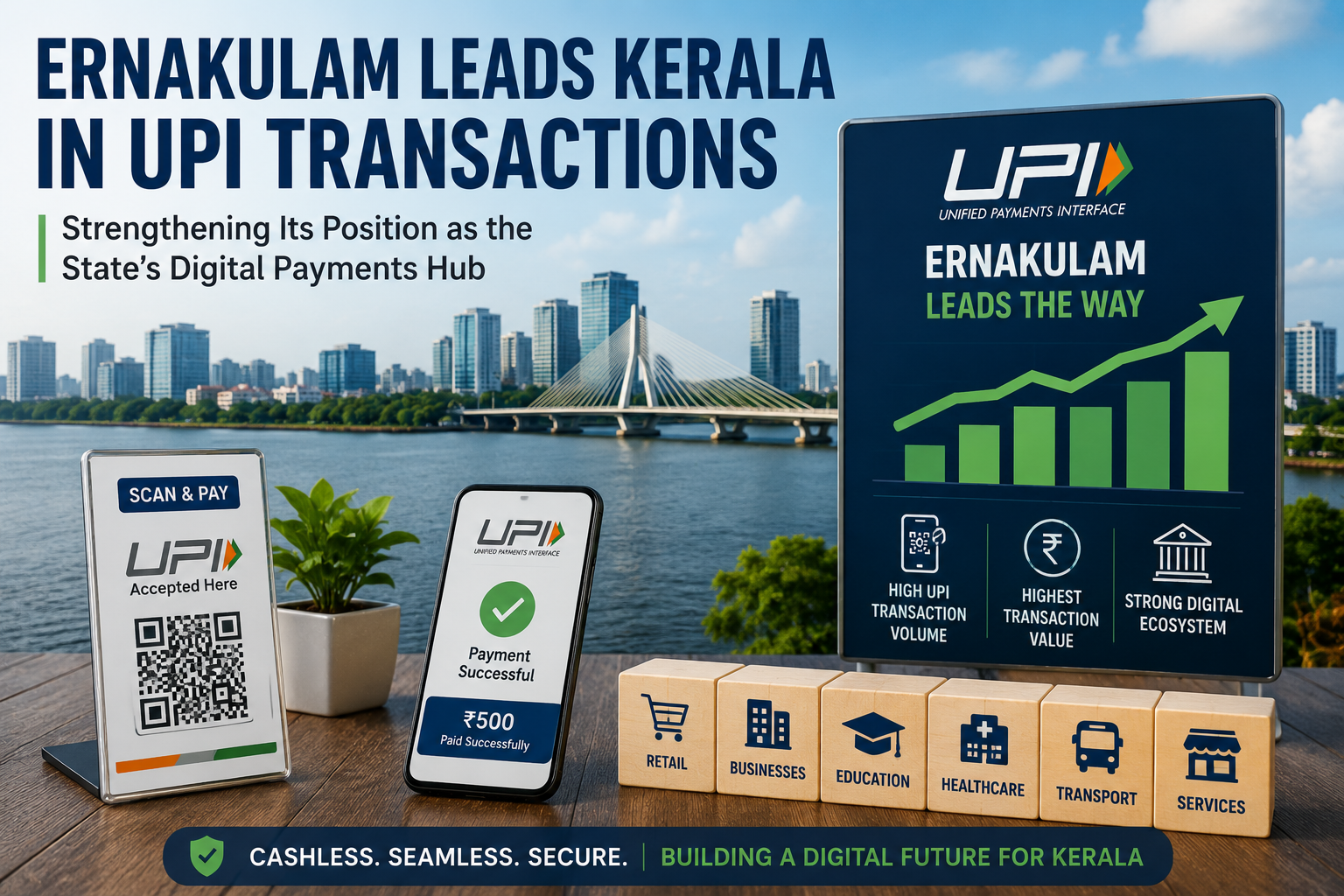
Kochi, August 4: Ernakulam has emerged as Kerala’s leading district in Unified Payments Interface (UPI) transactions, reflecting the district’s rapid digital transformation and its status as the state’s commercial and financial capital. The latest figures indicate that Ernakulam accounts for the highest share of UPI transaction volume and value in Kerala, driven by its thriving business ecosystem, technology sector, retail trade, and widespread adoption of digital payment platforms.
Industry experts attribute Ernakulam’s strong performance to the concentration of businesses in Kochi, the presence of major IT parks, shopping malls, restaurants, educational institutions, hospitals, and a growing startup ecosystem. The increasing preference for cashless transactions among consumers and merchants has significantly boosted the use of UPI for everyday payments, from small retail purchases to high-value business transactions.
Officials noted that digital payment adoption has expanded rapidly across the district over the past few years. Small traders, street vendors, supermarkets, public transport operators, healthcare providers, and service establishments have widely embraced QR code-based payments, making UPI one of the most preferred payment methods. The convenience of instant transfers, zero or low transaction costs for users, and interoperability across banks have contributed to its popularity.
The growth in Ernakulam mirrors the nationwide surge in digital payments. According to the National Payments Corporation of India (NPCI), UPI recorded its highest-ever monthly performance in July 2026, processing 23.66 billion transactions worth nearly ₹29.9 lakh crore, highlighting the continued expansion of India’s digital payments ecosystem.
Financial analysts believe Ernakulam’s leadership in digital transactions demonstrates the district’s strong digital infrastructure, high banking penetration, and widespread smartphone usage. They also expect UPI usage to continue growing as more businesses adopt digital payment solutions and government initiatives promote financial inclusion and cashless commerce.
State officials said the increasing reliance on digital payments has improved transaction efficiency, reduced dependence on cash, enhanced transparency, and supported economic activity across sectors. They added that continued investment in secure payment infrastructure and digital literacy would further strengthen Kerala’s transition toward a digitally empowered economy.
With digital transactions becoming an integral part of daily life, Ernakulam is expected to remain at the forefront of Kerala’s digital payment revolution, serving as a model for other districts in expanding cashless, secure, and technology-driven financial services.