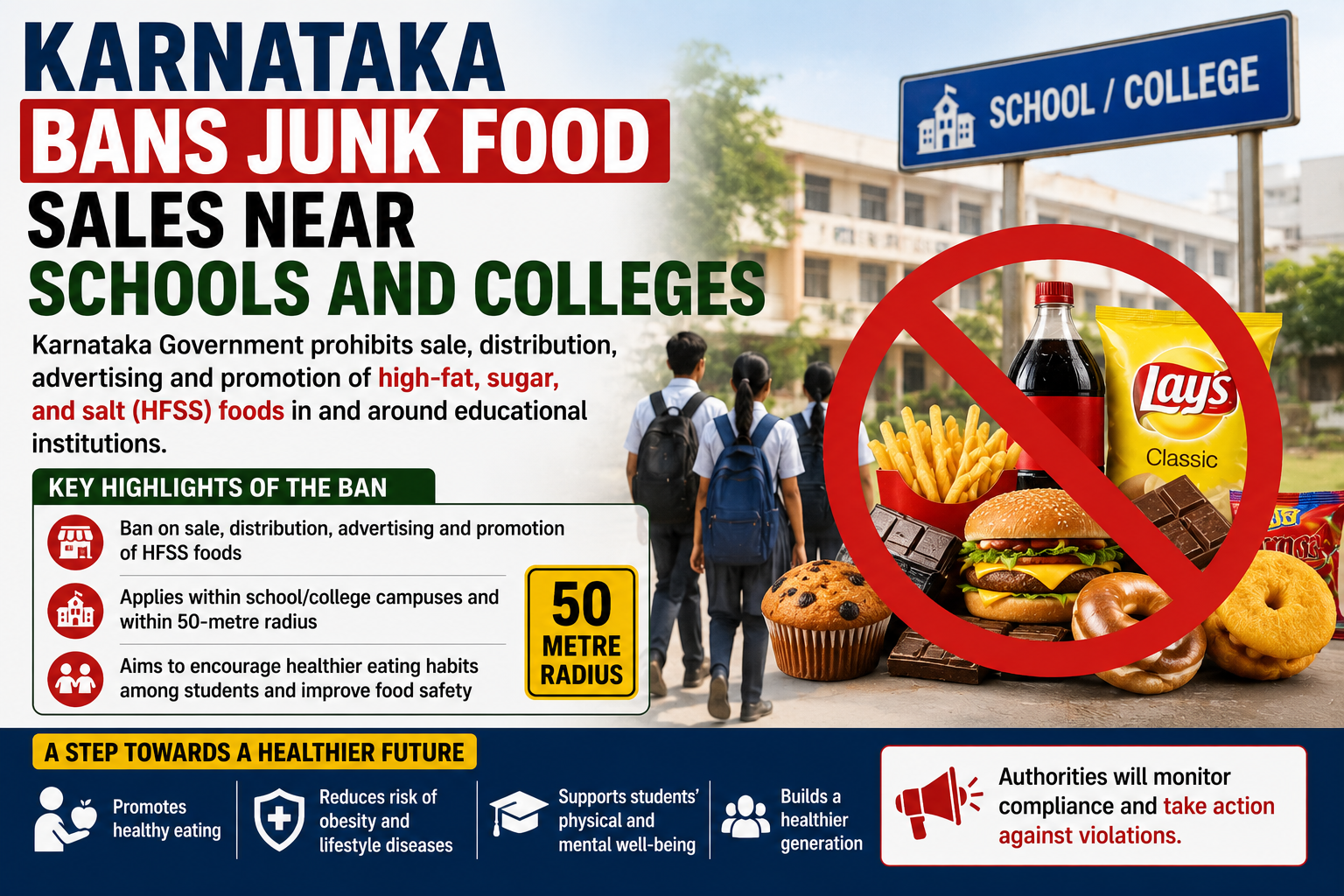
Bengaluru, August 1: The Karnataka Government has announced a statewide ban on the sale, distribution, advertising, and promotion of high-fat, sugar, and salt (HFSS) foods in and around educational institutions. The new directive prohibits such products within school and college campuses and within a 50-metre radius of their premises, marking a significant step towards promoting healthier eating habits among students.
The decision has been issued by the Department of Health and Family Welfare in line with national public health recommendations aimed at reducing childhood obesity and lifestyle-related diseases. Officials said foods classified as HFSS—including many packaged snacks, sugary beverages, confectionery items, and processed fast foods—will no longer be permitted for sale or promotion in designated areas around educational institutions.
Under the new guidelines, schools, colleges, canteens, vendors, and nearby commercial establishments have been instructed to comply with the restrictions. The government has also prohibited advertisements and promotional campaigns for HFSS products within the prescribed zone to reduce students’ exposure to unhealthy food marketing.
Health experts have welcomed the move, noting that excessive consumption of foods high in fat, sugar, and salt contributes to obesity, diabetes, hypertension, and other non-communicable diseases. They believe creating healthier food environments around educational institutions can encourage better dietary habits among children and young adults while supporting long-term public health objectives.
Educational institutions have been advised to promote nutritious alternatives such as fresh fruits, vegetables, milk, whole grains, and other balanced food options through their canteens and awareness programmes. The government also plans to conduct nutrition education campaigns to help students understand the importance of healthy eating and active lifestyles.
Authorities stated that district officials will monitor compliance with the new regulations, and action may be taken against establishments that violate the guidelines. School administrations have also been encouraged to work closely with parents, vendors, and local authorities to ensure effective implementation.
The Karnataka Government said the initiative forms part of a broader strategy to improve student health, strengthen food safety standards, and create healthier learning environments across the state. Officials expressed confidence that the policy will contribute to better nutrition and help reduce the long-term burden of diet-related diseases among the younger population.