


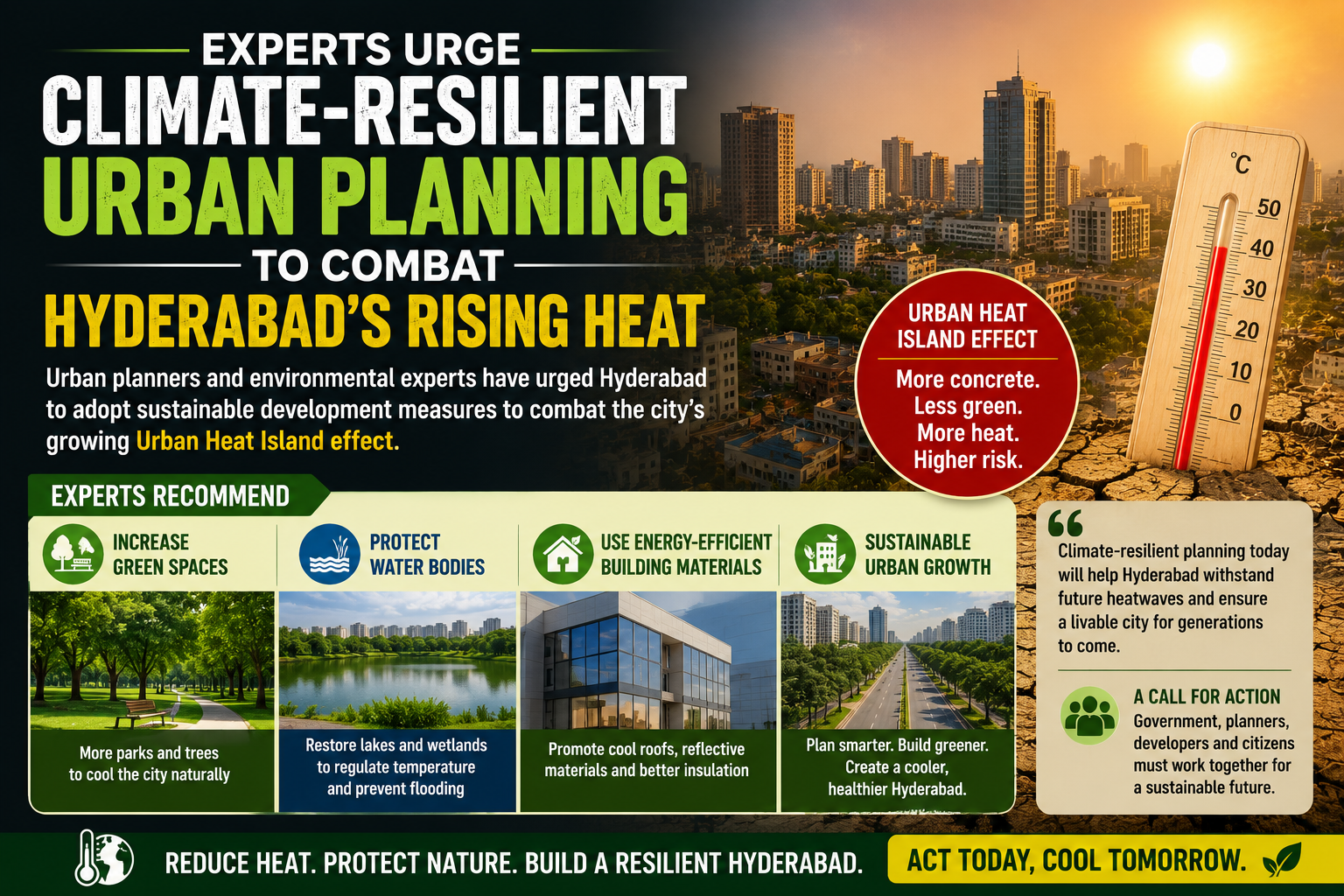
Hyderabad, July 31: Urban planners, architects, and environmental experts have called for Hyderabad to adopt climate-resilient urban planning measures to address the city’s rapidly intensifying Urban Heat Island (UHI) effect. They warn that unchecked urbanization, shrinking green cover, and the increasing use of heat-absorbing construction materials are making Hyderabad significantly warmer than its surrounding rural areas, leading to higher energy consumption, health risks, and reduced quality of life.
Experts explain that the Urban Heat Island effect occurs when concrete buildings, asphalt roads, and glass-clad structures absorb and retain heat during the day, releasing it slowly at night. As Hyderabad continues to expand with large residential townships, commercial complexes, and transport infrastructure, the reduction of natural vegetation and water bodies has further intensified local temperatures, especially during the summer months.
To tackle the growing challenge, specialists have recommended a series of sustainable development measures. These include increasing urban green spaces, planting more roadside trees, restoring lakes and wetlands, promoting green roofs and vertical gardens, and encouraging the use of reflective and energy-efficient building materials that reduce heat absorption. They also stress the importance of preserving open spaces and improving natural ventilation within densely built neighborhoods.
The experts noted that climate-resilient planning should become an integral part of Hyderabad’s future development strategy rather than being treated as an environmental afterthought. They argue that incorporating heat mitigation into city planning can help lower surface temperatures, improve air quality, reduce electricity demand for cooling, and make public spaces more comfortable for residents. Similar recommendations have been included in national urban planning guidelines and Heat Action Plans prepared for several Indian cities.
Environmental researchers also highlighted that climate adaptation requires collaboration between government agencies, urban planners, developers, and citizens. They emphasized that protecting existing green cover, preventing encroachment of lakes, and adopting sustainable construction practices are essential to ensuring Hyderabad remains livable as climate change accelerates and temperatures continue to rise.
With Hyderabad emerging as one of India’s fastest-growing metropolitan regions, experts believe that investing in climate-resilient infrastructure today will help the city better withstand future heatwaves while supporting sustainable economic growth. They stress that balancing development with environmental conservation is key to creating a healthier, cooler, and more resilient urban future.