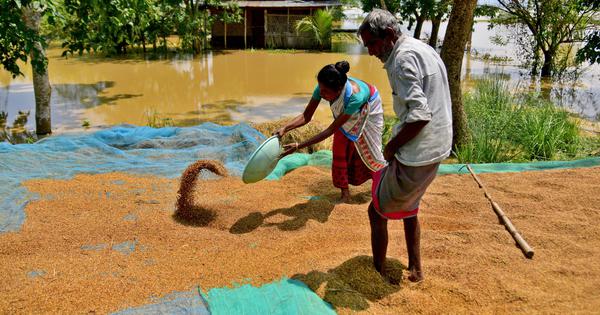
India is witnessing growing concern over the impact of below-normal monsoon rainfall on agriculture, particularly in Jharkhand, where delayed rains have disrupted the sowing and transplantation of paddy during the crucial kharif season. Large parts of the state have recorded significant rainfall deficits, leaving fields dry and forcing many farmers to postpone planting or switch to crops such as maize that require less water. Experts warn that if rainfall does not improve soon, paddy production could decline sharply, affecting farmers’ incomes, food security, and rural employment.
The situation has renewed attention on farm ponds as a practical solution for improving water security. Farm ponds collect and store rainwater during the monsoon, allowing farmers to irrigate crops during dry spells. They also help recharge groundwater, reduce soil erosion, support fisheries and livestock, and improve resilience against increasingly erratic rainfall caused by climate change. Conservationists and agricultural experts argue that integrating farm ponds with watershed management and efficient irrigation systems can significantly strengthen climate-resilient farming.
Government agencies are encouraging farmers to diversify crops, adopt water-efficient farming practices, and make better use of existing water-harvesting infrastructure. While emergency measures may help reduce immediate losses, experts emphasize that long-term investments in rainwater harvesting, sustainable irrigation, and climate-adaptive agriculture are essential to safeguard India’s food production against increasingly unpredictable monsoon patterns. The current season highlights the urgent need to strengthen water management strategies to ensure sustainable agriculture in a changing climate.