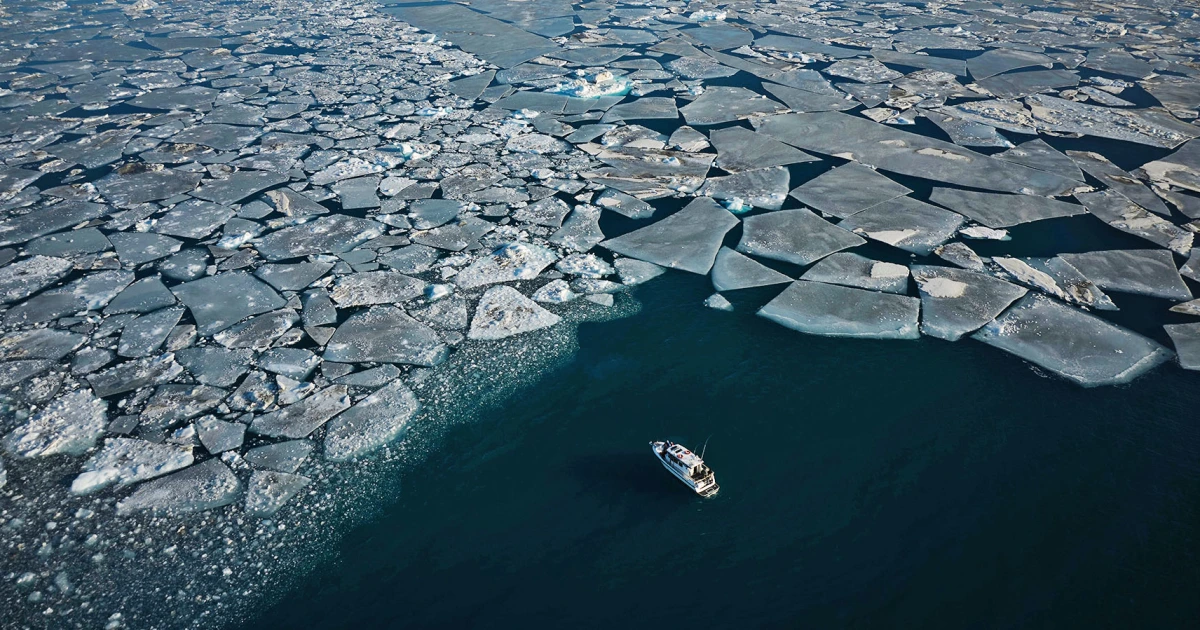
A sharp decline in Arctic sea ice is raising fresh concerns about the speed of climate change and its global consequences. Scientists report that the Arctic experienced one of its largest winter sea ice losses on record, with ice cover failing to recover to normal seasonal levels. The reduced ice extent allows the dark ocean surface to absorb more solar heat, which further accelerates warming in a feedback process known as Arctic amplification. Researchers warn that this trend could contribute to more extreme weather events, including heatwaves, heavy rainfall, droughts, and disruptions to atmospheric circulation patterns across the Northern Hemisphere. The Guardian
The Arctic is warming nearly four times faster than the global average, making it one of the most climate-sensitive regions on Earth. Melting sea ice also threatens polar ecosystems, including polar bears, seals, and other species that depend on stable ice habitats. Scientists emphasize that continued greenhouse gas emissions remain the primary driver of the decline. They are calling for faster global action to reduce emissions, expand renewable energy, and strengthen international climate commitments before the loss of Arctic ice reaches even more dangerous levels.
News as reported